
There is no reigning 'Prince of France' today, but the person most commonly meant by that phrase online is Jean d'Orléans, the current head of the House of Orléans and the Orléanist pretender to the French throne. He holds the title Count of Paris and is sometimes styled 'Duc de France' in dynastic circles.
Prince of France Net Worth: Who It Is and How Much

Laurent Devereaux
1 Jun 2026

His estimated personal net worth is not publicly confirmed, but credible estimates place the combined Orléans family fortune in the range of several tens of millions of euros, with some sources suggesting figures between €30 million and €100 million when accounting for family real estate, historical assets, and investment holdings.
It is almost certainly not a billionaire-level fortune, which puts it in a very different league from France's luxury dynasty wealth tracked by sites covering the Arnault or Pinault families.
Who exactly is 'the Prince of France'?

The phrase 'Prince of France' is ambiguous and rarely refers to a single official, universally recognized title. In historical usage, it described senior members of the French royal family under the monarchy. Today, France is a republic, so no one holds a formally recognized royal title. The person most plausibly associated with this phrase in modern online searches is Jean d'Orléans, born in 1965, who [leads the House of Orléans](https://en.
wikipedia. org/wiki/HouseofOrl%C3%A9ans) as the Orléanist claimant to the French throne. His official title within the dynastic family is Count of Paris, and the family's own website styles him as 'Le Comte de Paris. ' Royalist circles sometimes refer to him using the grander formulation 'Duc de France' or simply 'the Prince of France' as a way to assert dynastic legitimacy.
It is worth noting that a competing Bourbon claimant exists under the Legitimist line, centered on Louis de Bourbon, Duke of Anjou. That branch traces its claim through Philip V of Spain and holds a separate, distinct pretension to the French throne. If you are searching for 'Louis Alphonse, Duke of Anjou net worth,' that is an entirely different profile. For this article, we focus on Jean d'Orléans because he is the figure most commonly labeled 'Prince of France' in popular English-language searches.
How to estimate net worth for a titled heir with no public disclosures
Titled heirs from deposed royal families are among the hardest people to value financially. Unlike a listed company executive, they have no mandatory salary disclosures, no stock option filings, and no transparent governance. The method I use for anyone in this category works in four steps.
- Identify the family's historical asset base: former estates, royal palaces, art collections, and hereditary property. For the Orléans family, this includes connections to properties like the Château d'Amboise and various European residences that passed through or remain adjacent to the dynasty.
- Check for current corporate or business interests: does the person or their family hold stakes in operating companies, luxury firms, or investment vehicles? For Jean d'Orléans, there are no major publicly known corporate stakes comparable to Arnault's LVMH holdings.
- Research charitable foundations and trusts: assets held in foundations are often the vehicle through which noble families retain control of property and art without personal ownership. These can be large without showing up in personal net worth.
- Cross-reference with credible financial journalism and official dynastic communications: interviews, profiles in French press outlets like Le Figaro or Le Point, and the family's own official publications are the closest thing to a primary source.
Once you have those four layers mapped, you build a range rather than a single number. The range accounts for assets that might be held in trust, co-owned with siblings, or valued inconsistently across different sources. For Jean d'Orléans, honest reporting produces a range, not a precise figure.
Best sources to actually research this

Because there are no public financial filings for private individuals like Jean d'Orléans, you have to triangulate. Here are the most reliable places to look, in order of credibility.
- The official Orléans family website (Comte de Paris) and associated dynastic publications: these confirm titles, family structure, and sometimes mention charitable or heritage work tied to assets.
- French financial press: Le Figaro Magazine, Challenges (which publishes an annual ranking of France's 500 richest people), and Le Point regularly profile wealthy French dynasties. The Challenges ranking is particularly useful because it uses a consistent methodology year over year.
- French notarial records and property registries: real estate holdings in France are partially traceable through public cadastral records and notarial acts, though this requires navigating French administrative systems.
- Corporate registry searches (Infogreffe, Pappers.fr): if any family member holds a directorship in a French company, it will appear here. This is a quick way to check for active business interests.
- Verified interviews in mainstream media: profiles in Vanity Fair France, Paris Match, or similar lifestyle titles sometimes include financial context, though rarely with precision.
- Genealogical and dynastic databases: sites like the Almanach de Gotha or Burke's Peerage can confirm family structure, which helps identify who else shares in the family wealth.
What assets likely sit behind the number
The Orléans family wealth, to the extent it still exists, is rooted in centuries of royal holdings that were dramatically disrupted by the French Revolution, subsequent exile laws, and property confiscations. Much of what was once a staggering royal fortune was lost or redistributed. What likely remains today falls into a few categories.
- Real estate in France and Europe: noble families of this era frequently retained smaller private properties after the larger confiscations. Jean d'Orléans is associated with residences in France and possibly Portugal, where the House of Orléans historically had connections.
- Art, antiques, and heritage objects: dynastic families often hold significant value in furniture, portraits, decorative arts, and manuscripts that are difficult to value but can be worth tens of millions.
- Foundations and heritage trusts: the family has been involved in heritage preservation efforts, including links to the Château d'Amboise foundation, where assets are held institutionally rather than personally.
- Private investments: like most European aristocratic families with remaining capital, some portion is likely held in conservative investment portfolios, though the scale is unknown.
- Income from public appearances, books, and institutional roles: Jean d'Orléans has written on history and participates in public life, which generates modest income streams separate from inherited wealth.
It is important to be direct here: this is not a tech-billionaire or luxury-dynasty fortune. The Orléans family does not hold a stake in a publicly traded luxury conglomerate the way Bernard Arnault's family does through LVMH or the Pinault family does through Kering. The wealth is real but comparatively modest by the standards of the French ultra-rich tracked on this site.
How this fits into France's business and family dynasty landscape
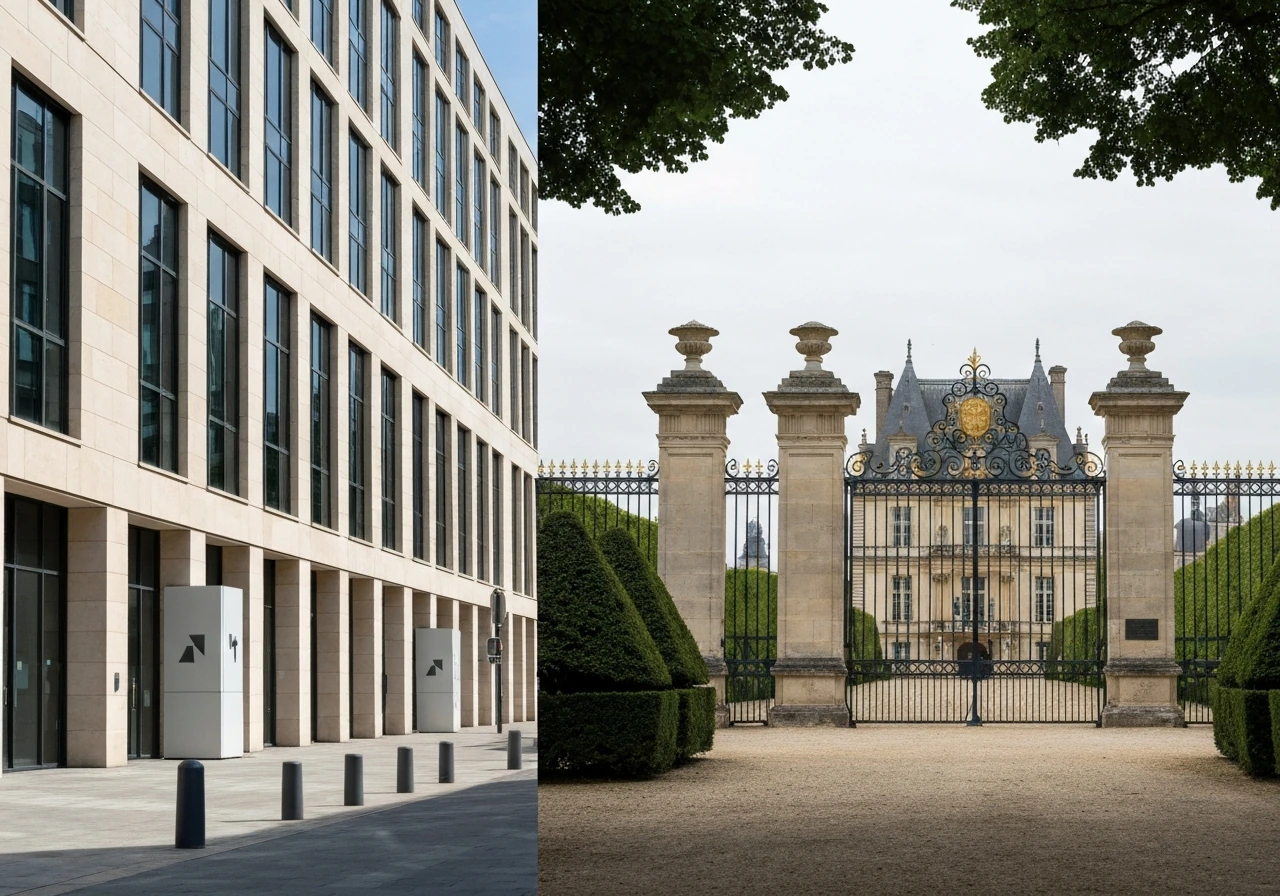
Understanding Jean d'Orléans's wealth requires calibrating it against the broader French wealth ecosystem. The mega-fortunes in France are almost entirely built on business empires, not noble inheritance. Bernard Arnault's net worth exceeded $150 billion at its peak, built through acquisitions within LVMH. François-Henri Pinault's Kering fortune sits in the tens of billions. These are operating business dynasties with transparent corporate structures, listed shares, and annual reports.
The Orléans family sits in a completely different category: a historic dynastic family without a current business empire of comparable scale. Their wealth is more analogous to that of older European aristocratic houses than to a luxury conglomerate founder. For context, figures like Grand Duke Henri of Luxembourg or Prince Laurent of Belgium operate within constitutional monarchies with civil list funding, which gives them a different financial structure than a deposed French claimant who relies entirely on private assets.
Jean d'Orléans has no civil list, no state funding, and no throne, which shapes the wealth profile significantly. That means any discussion of prince sebastien of luxembourg net worth is based on private circumstances, not public financial support Jean d'Orléans has no civil list, no state funding, and no throne.
Why net worth figures vary so much across sites
If you have already searched and found wildly different numbers, ranging from a few million to hundreds of millions, here is why that happens and how to sanity-check what you read.
| Reason for variance | What it means practically | How to sanity-check |
|---|---|---|
| Private assets with no disclosure | No one outside the family knows the real numbers | Look for consistent figures across multiple reputable outlets, not single-source claims |
| Valuation timing differences | Real estate and art values fluctuate; a 2018 estimate may be outdated by 2026 | Check the date of the source and whether it references a specific valuation event |
| Family vs. personal wealth confusion | Some figures include extended Orléans family holdings, not just Jean's share | Look for sources that specify whether the figure is personal or dynastic |
| Currency conversion | Figures quoted in euros vs. dollars shift with exchange rates | Note the currency and the date; always convert to one currency for comparison |
| Speculation and aggregation errors | Many net worth sites copy from each other without original research | Prioritize sources that cite methodology, not just a number |
A reasonable sanity check: if a site claims Jean d'Orléans is worth over €500 million with no sourcing, that should raise immediate skepticism. There is no known business empire, no listed shareholding, and no public record of assets at that scale. A more credible estimate, based on known family history and available evidence, sits well below that threshold. For a deeper look at comparable figures, you can also review Grand Duke Henri of Luxembourg net worth estimates and how they are sourced grand duke henri net worth.
Your step-by-step research checklist

If you want to build or update your own estimate for Jean d'Orléans's net worth today, work through this checklist in order. It takes under two hours for a basic pass and can be repeated annually to keep the number current.
- Go to the official Orléans family website and note any current activities, institutional roles, or major announcements that could signal new assets or business ties.
- Search Challenges magazine's annual wealth ranking for any mention of the Orléans family or Jean d'Orléans directly. If they appear, note the methodology and year.
- Run a search on Pappers.fr or Infogreffe using 'Jean d'Orléans' or 'Orléans' as a keyword to identify any French corporate directorships.
- Check French property records via the cadastre public portal for any major real estate linked to the family name in key French regions.
- Search Le Figaro, Le Point, and Paris Match archives for the past 24 months using 'Jean d'Orléans' and 'patrimoine' (French for heritage or assets). Note any figures quoted and their sources.
- Cross-reference any numbers you find against the Challenges ranking methodology to understand whether they are market-cap based, asset-based, or speculative.
- Build your own range: low end (confirmed assets only), mid-range (confirmed plus likely private real estate and art), high end (including unknown trust and foundation assets). Label these clearly.
- Record the date of your estimate and the sources used, so you can update it when new information emerges, such as a major property sale, inheritance event, or media profile.
One final note: if your research appetite extends to neighboring figures in the European noble and royal wealth space, the wealth profiles of figures like the Prince of Monaco, Grand Duke Henri of Luxembourg, or Prince Sébastien of Luxembourg follow a different structure because those individuals belong to reigning constitutional monarchies with civil lists and state-linked assets. The Orléans case is genuinely private and harder to pin down, which is exactly why the range method matters more here than a single confident number.
FAQ
Why do websites give such different “Prince of France” net worth numbers?
Most of the variance comes from swapping assumptions. Some estimates treat historical royal assets as if they still control current wealth, others ignore that holdings may be distributed across trusts, co-ownership structures, or offshore entities, and some simply extrapolate from unrelated luxury-dynasty fortunes. A quick check is whether the estimate explains what asset categories it uses (real estate, foundations, investments) and whether it cites verifiable sources, not just a single headline figure.
If there is no reigning Prince of France, should I trust results that claim an official title today?
Be cautious. In modern France, the “Prince of France” label is informal and often used for dynastic branding. The article’s focus is the Orléanist claimant, Jean d’Orléans, but search results sometimes mix him with other European nobles or the competing Bourbon line, which leads to wrong net worth comparisons.
What is the most important distinction between “dynastic wealth” and “business dynasty wealth” for net worth estimates?
Business dynasties usually have public disclosures tied to operating companies, so net worth models can be built from listed share values, annual reports, and known ownership stakes. Dynastic wealth often relies on private assets, historic properties, and investment vehicles with limited reporting, so any single-number net worth will be less defensible and should be treated as a range.
Does Jean d’Orléans have any public income that should be included in net worth?
Net worth is about assets minus liabilities, not annual income, but many people confuse the two. For private individuals, you may find occasional public statements about roles or public-facing activities, yet that does not equal asset value. Unless there are documented holdings or confirmed investment/property valuations, income-based guesses can inflate estimates incorrectly.
How should I interpret claims that the Orléans family fortune is “in the hundreds of millions”?
A number that high is not impossible, but it should match specific asset evidence. Look for concrete, traceable components such as named real estate holdings, confirmed investment portfolios, or clearly documented foundation or trust structures. If the claim is unsupported by such breakdowns, treat it as speculation and keep your estimate well below that ceiling.
Could the Orléans family’s wealth estimates be exaggerated because of historical royal assets?
Yes. Historic royal holdings were heavily disrupted by confiscations, redistribution, and changes in legal ownership. Estimates that do not explain which portions survived legally into modern ownership, or whether rights were restored, tend to overstate current controllable wealth.
What common mistake leads people to compare the Orléans claimant to the Arnault or Pinault net worth?
The mistake is comparing fundamentally different wealth mechanics. Arnault and Pinault wealth is tied to large-scale public-company ownership and transparent market pricing. By contrast, the Orléanist claimant’s profile is mainly private assets without an equivalent publicly traded equity base, so valuation methods and certainty differ.
If I want to compute a personal “range” estimate myself, what asset categories should I include?
Use separate buckets and then sum ranges: (1) real estate (and any known valuation method), (2) liquid investments (broad range, not a precise figure unless sourced), (3) private business interests (only if ownership is confirmed), (4) interests through trusts or foundations (often hard to value), and (5) plausible liabilities like taxes, legal obligations, or maintenance costs. If a source skips major buckets, its single total is likely misleading.
Do civil-list or state-linked supports change how you should interpret net worth for European nobles?
Yes. For individuals linked to constitutional monarchies, civil list funding or state-linked benefits can affect total resources and public expectations, even if it is not the same as “net worth.” The article’s point is that the Orléans case is private and lacks that kind of state funding, so applying the same valuation framing can distort the comparison.
What if I actually meant the Bourbon claimant (Duke of Anjou) when I searched “Prince of France net worth”?
That’s a frequent mix-up. The Legitimist line centered on Louis de Bourbon (Duke of Anjou) is a different person with a different claims structure, and their financial context may not match Jean d’Orléans. If your search intent is “Duke of Anjou net worth,” you should use separate sources and do not reuse Jean d’Orléans numbers.
Are “net worth” estimates for nobles sometimes calculated differently from standard corporate net worth models?
Often, yes. Corporate net worth is typically modeled from identifiable equity and liabilities with market-priced inputs. For private individuals, estimates may use proxy assumptions, historical appraisals, or partial asset valuations, and may include or exclude things like art, collections, or trust interests inconsistently. A good sanity check is whether the estimate clearly lists what it includes and what it excludes.