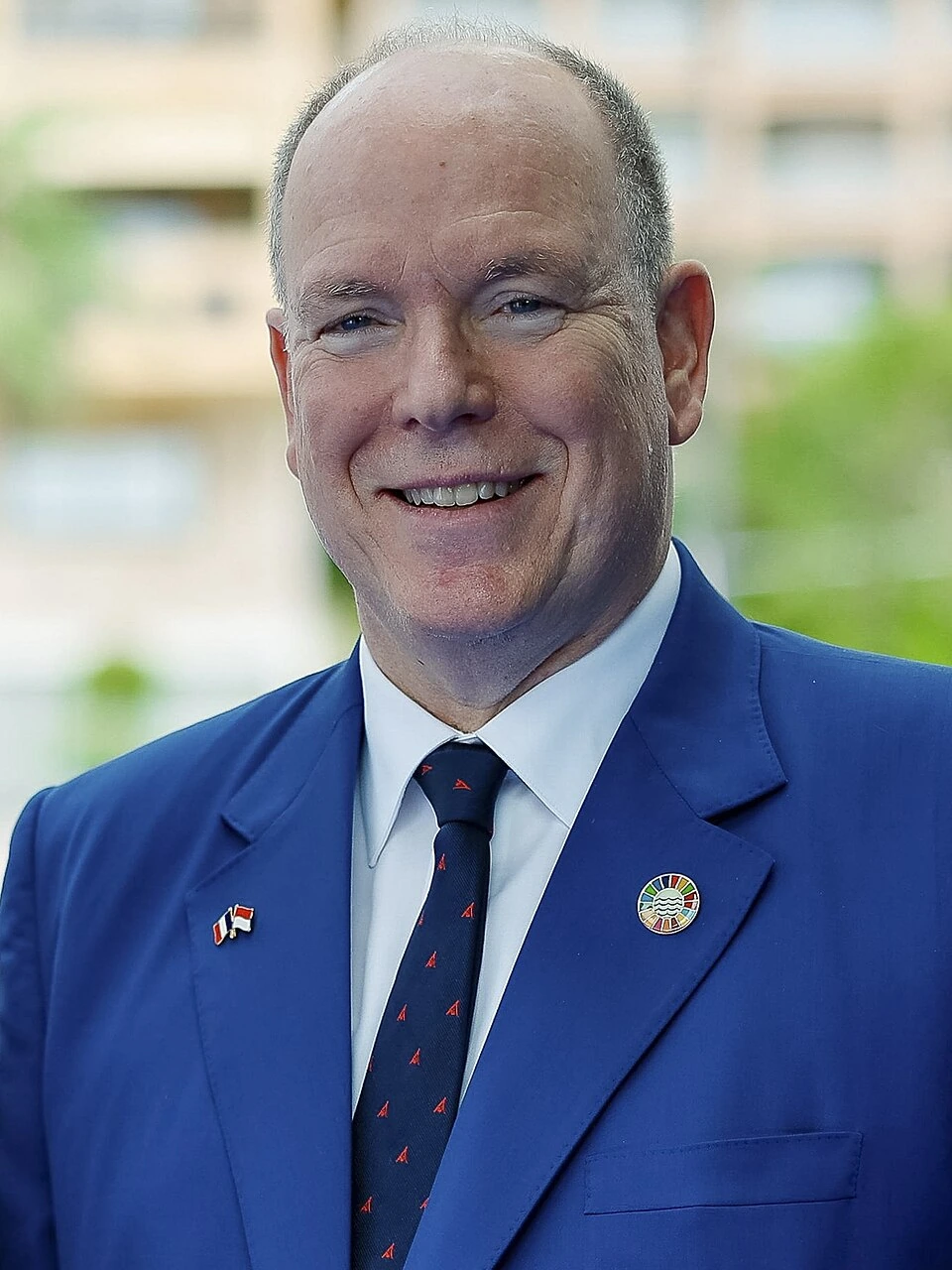
Net worth, when applied to a reigning sovereign, is a messier concept than it sounds. For a private billionaire, net worth is fairly straightforward: assets minus liabilities. For a sitting monarch, it blurs together personal holdings, family wealth accumulated over generations, assets that belong to the royal institution rather than the individual, and state resources that fund the palace but are not the prince's personal property to sell. Keep that distinction in mind whenever you see a headline number.
Why pinning down an exact number is genuinely difficult
Monaco's royal family does not publish a personal balance sheet. There is no annual disclosure filing, no regulatory requirement to report personal assets, and no independent audit of Albert II's private holdings. What Monaco does publish are government financial reports: the Board of Auditors submits annual public reports covering state revenue and expenditure, but these are governmental accounts, not personal wealth disclosures. You can read about state budget lines for "sovereign expenditure" (the costs of running the Prince's Palace and Sovereign House) in Monaco's public finance documents, but those figures tell you what the state spends on the institution of the monarchy, not what Albert II personally owns. This is consistent with Monaco’s constitutional material addressing the “Sovereign Household’s expenses and those of the Prince Palace” as part of the institutional framework blank" rel="noopener noreferrer">sovereign expenditure.
Celebrity net worth aggregator sites tend to publish figures ranging from roughly $1 billion to $2 billion for Albert II. Forbes has placed him in the billionaire range in past rankings, but Monaco royals are not regularly tracked the way LVMH or Kering family members are. The spread across sources is wide because each outlet uses a different methodology: some include palace real estate at estimated market value, some exclude it as a state asset, some roll in the Grimaldi family's historical land holdings, and some do not. There is no single authoritative number.
This is a common challenge when profiling European royalty. For comparison, similar ambiguity shows up with profiles like Grand Duke Henri's estimated wealth, where the line between personal assets and state assets is equally blurry. It is a structural problem with monarchy wealth reporting, not just a Monaco issue.
Where Albert II's wealth most likely comes from
Several categories of wealth are consistently discussed across credible sources and are worth understanding individually.
The Grimaldi family's land and real estate
The Grimaldi dynasty has ruled Monaco since the 13th century. Over those centuries, the family accumulated significant real estate holdings both within Monaco and internationally. Monaco itself is the world's second-smallest country and arguably the world's most expensive real estate market per square meter. Any residential or commercial property held personally by the Grimaldis in Monaco carries enormous implied value. Albert II is also known to own or have interests in real estate beyond Monaco's borders, including properties in France.
Société des Bains de Mer (SBM)
This is the single most important corporate holding tied to the Grimaldi family's wealth. Société des Bains de Mer (SBM) is the company that operates Monaco's famous Casino de Monte-Carlo, along with luxury hotels, restaurants, and entertainment venues. The Monegasque government is the majority shareholder in SBM, but the Grimaldi family holds a meaningful personal stake. SBM is a publicly listed company on the Paris stock exchange, so its valuation is observable, and the family's stake can be partially estimated from available filings.
Investment portfolio and private holdings
Like most long-standing royal families, the Grimaldis are assumed to hold a diversified investment portfolio: equities, bonds, private equity stakes, and potentially art or collectibles. These are entirely private and not disclosed. Albert II's father, Rainier III, was known to be a shrewd accumulator of assets during his reign from 1949 to 2005, which means a substantial inherited portfolio is plausible. The exact composition is unknown.
Assets tied to Monaco's royal household
Some assets associated with Albert II are better understood as belonging to the institution of the monarchy rather than to Albert personally. The Prince's Palace of Monaco is the official residence and a major tourist attraction. Its value as real estate would be extraordinary, but it is not a personal asset he could liquidate. The same logic applies to the royal art collections, historic archives, and certain vehicles or vessels maintained for state purposes.
Monaco's public finance documents use a specific budget category for "sovereign expenditure," defined as expenditure relating to the Prince's Palace and Sovereign House. That budget line funds palace operations, not Albert's personal lifestyle. Understanding this split is crucial when reading wealth estimates: aggregators who include palace real estate in net worth calculations will produce much higher numbers than those who exclude institutional assets.
This institutional-versus-personal distinction applies across many European royal contexts. The same question comes up when looking at figures like Prince Laurent of Belgium's reported net worth, where separating civil list income from personal capital requires careful reading.
Income, wealth structure, and what can actually be verified
Albert II's income streams likely include dividends from his personal SBM stake, returns from his investment portfolio, and potentially income from privately held real estate. Monaco has no income tax for residents, which means whatever he earns within the principality is not subject to the kind of tax filings that sometimes leak financial details to researchers.
What can be partially verified: the SBM share price and approximate Grimaldi family stake (giving a rough equity value), publicly sold properties if any transactions appear in French or Monegasque records, and occasional disclosures in court documents related to the family (Albert's paternity cases in the early 2000s, for example, surfaced some financial detail).
What cannot be verified: the private investment portfolio, offshore or trust structures, personal art and collectibles, cash holdings, and the valuation of any privately held business interests. The honest answer is that the bulk of the estimated fortune sits in categories where independent verification is not possible with publicly available information.
| Wealth Category | Verifiability | Typical Estimate Range |
|---|
| SBM equity stake | Partially verifiable via exchange filings | Hundreds of millions EUR |
| Monaco real estate (personal) | Low — private transactions | Significant but unknown |
| Palace and institutional assets | Not personal wealth | Excluded from credible estimates |
| Investment portfolio | Not verifiable | Unknown |
| International property | Low — some public records possible | Estimated in the tens of millions |
How to find the best estimates and cross-check what you read
Start with the most methodologically transparent sources. Forbes, when it covers royal wealth, usually explains its methodology in footnotes or accompanying text. Celebrity net worth sites like Celebrity Net Worth or Wealthy Gorilla publish figures but rarely explain their sources, so treat those as a rough starting point rather than a definitive answer. The range you will encounter most often in 2025 and 2026 coverage sits between $1 billion and $2.5 billion, with $1 billion being the more conservative figure.
- Check whether a source includes palace real estate. If it does, the number will be inflated relative to personal wealth.
- Look for SBM-specific analysis. Since SBM is publicly traded, any estimate that references its share price and the Grimaldi stake is grounded in something real.
- Compare at least two or three sources and note where they diverge. A $500 million difference usually traces back to methodology, not new information.
- Look for dates. Royal wealth estimates can go stale quickly if a major asset changes in value or ownership.
- Be skeptical of very precise figures like '$1.2 billion exactly.' Precision implies data that does not actually exist for private royal wealth.
For broader context on how European royalty and aristocratic wealth gets estimated and reported, it helps to look at comparable profiles. The approach used to estimate Louis Alphonse, Duke of Anjou's wealth or Prince Sébastien of Luxembourg's finances uses similar logic: identify known assets, acknowledge unknown private holdings, and present a range rather than a single figure.
How Monaco's monarchy finances actually work
Monaco operates as a constitutional principality. The Sovereign Prince is head of state with executive power, but the government runs on state finances that are separate from the royal family's personal wealth. Monaco is famous for having no income tax, low corporate tax, and a compact, wealthy resident base that generates significant VAT and other revenues. The state is financially healthy and allocates a formal budget for the Sovereign House (palace operations, staff, official travel, ceremonies), but this is public money allocated to the institution, not a personal stipend in the traditional sense.
A common misconception is that Albert II controls Monaco's state budget as personal wealth. He does not. Monaco's government has a Council of Government and a National Council (parliament) that oversee public finances. The prince has constitutional authority, but he does not personally pocket state revenues. Another misconception is that because Monaco is a tax haven for its residents, Albert himself has no financial obligations anywhere. In reality, as a French citizen by birth (his mother Grace Kelly was American, but his father Rainier was Monegasque), his cross-border obligations are more complex than the simple "no taxes in Monaco" framing suggests.
It is also worth noting that the Grimaldi family's wealth is not unique in the European context of royal-adjacent fortunes. Profiles of figures adjacent to French elite wealth, from the estimated fortunes of those with claims to the French throne to athletes with Monaco connections like Gaël Monfils and his reported net worth, illustrate how wealth in and around Monaco intersects with French culture and finance more broadly.
The best available estimate for 2026
Based on the available information as of early 2026, the most credible range for Albert II's personal net worth is approximately $1 billion to $2 billion USD. The lower end ($1 billion) is the more defensible figure if you exclude institutional assets like the palace and count only the SBM stake, known real estate, and a reasonable private portfolio estimate. The higher figures circulating online ($2 billion or more) typically incorporate palace real estate or other institutional assets, which inflates the number beyond what most wealth analysts would call personal net worth.
If you want a single working figure, $1 billion to $1.5 billion is where the more careful estimates land. Treat anything higher as speculative unless the source explains exactly what it is counting. And keep in mind that for a sitting monarch of a centuries-old dynasty running a luxury-oriented microstate, even the conservative estimate is a floor, not a ceiling, given how much simply cannot be verified from outside.