
The most defensible estimated net worth range for Louis Alphonse, Duke of Anjou, is somewhere between $5 million and $30 million USD, but that figure is genuinely hard to pin down because there is no public financial disclosure for him personally. The number comes from indirect bracketing: looking at his maternal family's wealth sphere (the Franco heirs and the Martínez-Bordiú network), his aristocratic lifestyle signals, and the typical inheritance expectations for someone in his dynastic position. If you've seen a specific, confident number on a celebrity net-worth site, treat it with skepticism. Those pages rarely show their work.
Louis Alphonse Duke of Anjou Net Worth: Estimate and How to Verify

Laurent Devereaux
25 Jun 2026
Why the number is so hard to nail down
European aristocrats don't file the equivalent of a public SEC disclosure. Louis Alphonse holds no elected office, runs no publicly traded company, and has made no known voluntary statements about his finances. That means every figure you'll find online is an estimate built on assumptions, and most of those estimates don't disclose their assumptions at all. Low-credibility net-worth aggregator sites frame him as deriving wealth from 'inheritance and business ventures' without naming a single verifiable document. That's not research. The honest answer is a range, not a number, and even that range carries real uncertainty.
Who exactly is Louis Alphonse, Duke of Anjou?

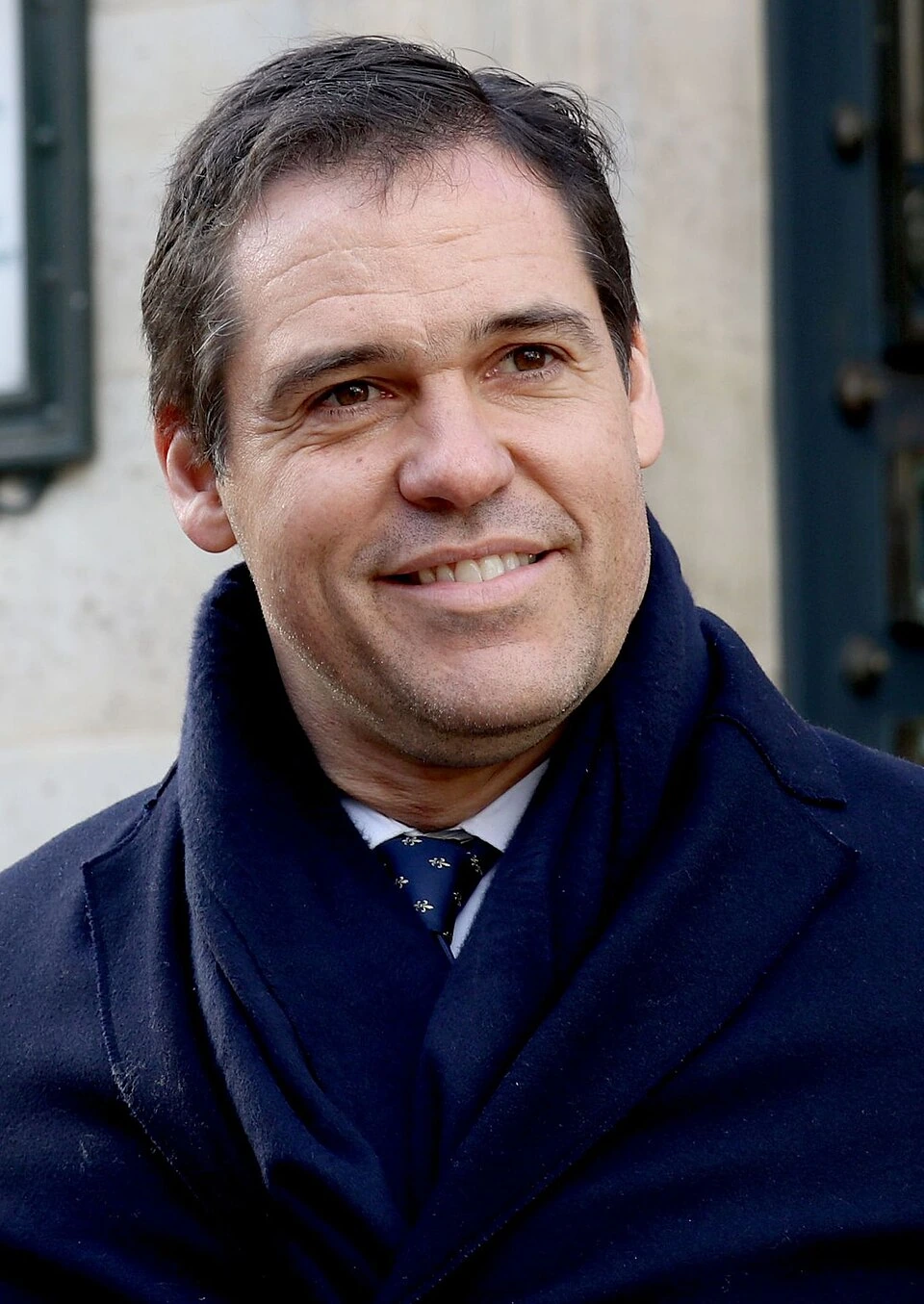
Louis Alphonse de Bourbon, born April 25, 1974, in Madrid, is the second son of Alfonso de Borbón (Duke of Anjou and Cádiz) and María del Carmen Martínez-Bordiú y Franco. That maternal connection is the most important detail for understanding his wealth context: Carmen Martínez-Bordiú is the daughter of Cristóbal Martínez-Bordiú and Carmen Franco, the 1st Duchess of Franco, making Louis Alphonse a great-grandson of Francisco Franco, the former Spanish dictator.
On the dynastic side, French Legitimists recognize him as the head of the House of Bourbon and claimant to the defunct French throne under the style 'Louis XX. Wikipedia describes Louis Alphonse de Bourbon as being blank" rel="noopener noreferrer">born on 25 April 1974 in Madrid and as “Louis XX,” whom French Legitimists regard as head of the House of Bourbon and claimant to the defunct French throne. ' French Wikipedia describes him as the 'aîné de toutes les branches légitimes subsistantes' of the Capetian Bourbon line. His official title is Duke of Anjou, though his formal Spanish titles were affected by a 1987 Spanish government ruling that grandee titles inherited from his father (including the Dukedom of Cádiz) would be borne on a lifetime-only basis, meaning they did not automatically pass to Louis Alphonse by hereditary right.
Don't confuse him with these other 'Anjou' figures
The title 'Duke of Anjou' has been used across centuries by multiple French dynasties, which creates real confusion in search results. Louis François, Duke of Anjou (born 1672) is a completely different historical figure. There are also Valois and earlier Bourbon uses of the ducal title. Additionally, some French sources refer to competing claims: there is an ongoing dispute between the Legitimist Bourbon line (Louis Alphonse's camp) and the Orléanist line over who rightfully holds the title 'Duke of Anjou.' If you're reading a French source discussing 'deux lignées capétiennes' and the Duke of Anjou title, it may be describing this dynastic dispute rather than Louis Alphonse's personal finances. Always check the birth year (1974) and the Martínez-Bordiú maternal connection to confirm you're looking at the right person.
Where his wealth likely comes from

There are two main wealth spheres to consider: his Bourbon aristocratic inheritance and his Franco-family maternal connections.
The Franco-Martínez-Bordiú family network
This is the more financially documented side. Spanish investigative reporting has described the Franco heirs' combined holdings as potentially worth around 600 million euros across properties and companies, though that figure covers the broader family group, not Louis Alphonse individually. The family's real-estate interests have been partly channeled through a holding company called Prístina SL. Spanish state attorneys filed a civil demand against Franco grandchildren and Prístina SL in a La Coruña court over asset disputes, which tells you the holdings are real but also legally contested. As of August 2024, Prístina SL still shows registration activity in Spain's commercial registry. If you want a traceable starting point for research, that company is it.
The Bourbon dynastic side
As the recognized head of the Legitimist Bourbon line, Louis Alphonse benefits from a network of supporters and patronage that comes with the role. In March 2018, following the death of his grandmother Carmen Franco in December 2017, he was named honorary president of the Francisco Franco National Foundation. That role carries symbolic weight and presumably some organizational influence, but it is not a direct income source in the conventional sense. What it does signal is that he remains embedded in the institutional structures surrounding Franco-era legacy assets.
Possible liabilities and risks
There are online claims (including Reddit threads) linking his family to a bankruptcy episode involving Banco del Orinoco in Panama and Curaçao. These claims are not backed by primary documents in any accessible source, so they should be treated as leads to verify in official court or banking regulator records rather than established facts. If you're doing serious research, this is a thread worth pulling. Unresolved litigation and contested asset structures can significantly reduce a realistic net-worth figure compared to the gross asset values cited in press reports.
A repeatable method for researching aristocrat net worth

Because figures like Louis Alphonse don't file public disclosures, you have to work from indirect evidence. Many readers also ask what Prince Laurent of Belgium is worth, so net-worth claims for different royals are often compared side by side aristocrat net worth. Here's the approach that produces the most defensible estimates:
- Start with corporate registries. In Spain, that means the Registro Mercantil and BORME (Boletín Oficial del Registro Mercantil). Search for companies linked to the family by name (e.g., Prístina SL). Look at directors, share structures, and annual filings to get asset snapshots.
- Check foundation registries. If the subject holds an honorary or active role in a foundation, many European countries require foundations to file annual accounts. The Francisco Franco National Foundation is the relevant one here.
- Search for court records and litigation. Disputes over inheritance, property, or company control often surface in press reporting with enough detail to anchor asset brackets. The EL PAÍS coverage of the State Attorney filing against Prístina SL is a good example of this kind of anchoring evidence.
- Look for credible long-form journalism. Outlets like EL PAÍS, Le Monde, and mainstream biographies are a step above net-worth tag pages because they cite specific sources and documents. Vice, for example, covered Louis Alphonse as a claimant figure with biographical detail, not as a wealth story, but that kind of reporting still provides identity verification and timeline anchors.
- Sanity-check net-worth claims by asking: does the source disclose assumptions? Does it name specific assets, companies, or legal structures? If not, discount it heavily.
- Build a range, not a point estimate. Assign a low end (documented, legally unencumbered assets), a mid range (likely but not confirmed), and a high end (maximum exposure including contested assets at face value). Then subtract known litigation risks.
Key moments that could have shifted his financial position
| Year | Event | Likely financial impact |
|---|---|---|
| 1987 | Spanish government rules paternal grandee titles are lifetime-only, not hereditary | Reduced formal title inheritance; uncertain impact on associated estates |
| 2018 (March) | Named honorary president of the Francisco Franco National Foundation | Increased proximity to Franco-heritage institutional assets |
| 2017 (December) | Death of grandmother Carmen Franco, 1st Duchess of Franco | Potential inheritance event within the broader family; asset-distribution timeline unclear |
| 2019 | State Attorney files civil demand against Franco grandchildren and Prístina SL | Created legal uncertainty around real-estate holdings in the family network |
| 2024 (August) | Prístina SL shows updated BORME registration activity | Suggests the company remains active; worth checking current filings for asset changes |
What his lifestyle actually tells you about his wealth
Lifestyle signals can bracket a realistic minimum, but they're easy to misread. Louis Alphonse and his wife have been documented attending high-profile events such as a Versailles Foundation benefit dinner in New York, where they were introduced as 'Their Royal Highnesses, The Prince and Princess Louis Alphonse of Bourbon, Duke and Duchess of Anjou. Prince Sebastien of Luxembourg net worth figures are often estimated the same way, using indirect evidence rather than public financial disclosures. ' Attendance at these kinds of events signals access to upper-tier social and philanthropic networks, but it doesn't mean he's personally funding them. Aristocratic figures are frequently hosted as guests of honor rather than as wealthy donors.
Based in Madrid, his day-to-day lifestyle is not publicly documented in any granular way. There are no known private jet registrations, publicly listed real estate under his name, or major business directorship filings that would give a clean asset number. The absence of that evidence isn't proof of modest wealth; it's just a data gap. What you can reasonably infer is that someone in his position, with his family connections and social profile, is not financially struggling, but he is also unlikely to be in the same league as the dynastic-business fortunes profiled elsewhere on this site. If you’re looking specifically for the grand duke henri net worth, treat any reported number as an estimate unless it cites verifiable financial documents.
How he compares to other European royals and Bourbon relatives
It helps to set expectations by comparing Louis Alphonse to figures with similar profiles. He is notably different from working European royals. Albert II, Prince of Monaco, for example, has a fully institutionalized sovereign state behind him, with documented sovereign wealth and palace assets, making his net worth estimates far more grounded. If you're specifically looking for the prince of Monaco net worth figure, Albert II's case is the clearer comparison point because his wealth is more institutionally documented than Louis Alphonse's. Grand Duke Henri of Luxembourg similarly benefits from a reigning dynasty with state financial structures. Louis Alphonse, by contrast, is a claimant with no state, no throne, and no treasury.
Within the broader Bourbon-related dynasty, figures sometimes described as 'Prince of France' from the Orléanist line represent a competing claim to the same French throne, and their wealth profiles are similarly opaque. The two lines are frequently conflated in searches, which is why confirming Louis Alphonse's specific identity (born 1974, maternal connection to Franco) before reading any wealth article is essential.
The fairest comparison within this site's broader coverage might be to other aristocratic figures without active thrones or major business empires. His estimated range of $5 million to $30 million puts him well below the Arnault or Pinault tier, and also below reigning royals like Prince Albert or Grand Duke Henri, but comfortably above financial obscurity. He is wealthy by most standards, but his wealth is more inheritance-tier than empire-tier, and a meaningful portion of it is probably still entangled in the Franco-family asset disputes that have been playing out in Spanish courts.
The bottom line on what you can and can't verify
If you walked away needing one actionable takeaway: the $5 million to $30 million range is the most defensible estimate available today, built from indirect evidence about his family wealth sphere, lifestyle positioning, and institutional roles. If you're searching for the prince of france net worth number specifically, this is why the credible answer is still a broad range rather than a single verified figure. The true figure could be higher if the Martínez-Bordiú inheritance has been distributed more generously than publicly documented, or lower if litigation liabilities are significant. To refine it, start with Spain's Registro Mercantil for Prístina SL filings, check the Francisco Franco National Foundation's public accounts, and track any court outcomes in the ongoing Franco-heir asset disputes. Those three sources will move you from a bracketed estimate toward something closer to a documented figure.
FAQ
How can I tell whether a specific “louis alphonse duke of anjou net worth” number is credible?
If a page states a single, precise number, treat it as an assertion, not evidence. A quick check is whether the author names at least one primary document (for example, a specific court filing, an audited foundation statement, or a Registro Mercantil record). Without that, the number is usually a guess built from generic “inheritance” language.
Why do search results mix up different Dukes of Anjou with Louis Alphonse?
Start by validating identity before you validate wealth claims. Confirm the person is born in 1974, connect the maternal line to María del Carmen Martínez-Bordiú y Franco, and verify the titles context. This prevents mixing him with other historical Dukes of Anjou or confusing Legitimist and Orléanist claimants who share similar styling online.
Does being honorary president of the Francisco Franco National Foundation mean Louis Alphonse personally earns money from it?
Public foundation roles can be misleading. Even if an honorary position implies influence, it typically does not equal personal income. To test whether money could flow to him personally, look for disclosures of board compensation, staff payroll references, or distributions tied to his name, rather than assuming “honorary president” automatically means financial benefit.
Why can the reported family asset amounts be much higher than a realistic net-worth range?
Most aggregator estimates ignore liability and dispute risk. A practical adjustment is to treat any gross family-asset figure as an upper bound until you see case outcomes that reassign ownership, freeze assets, or force sales. If you find reports of contested companies or registered holdings being litigated, expect the realistic net-worth range to shift downward.
What is the most actionable way to verify the Spain-based wealth angle beyond generic inheritance talk?
For Spain-linked wealth research, “current registration” matters because it can indicate ongoing corporate activity even if ownership is contested. Use Prístina SL as your entry point, then check directors, legal events, filings, and any changes in shareholdings over time. This helps you move from family-level speculation to entity-level evidence.
How should I interpret event appearances and philanthropic dinners when estimating his wealth?
Lifestyle signals are weak predictors of personal liquidity. Being hosted at major events can happen due to social networks, invitations, or representational duties, not direct personal funding. If you want a tighter bracket, look for evidence that he is a paying sponsor, a listed donor in event programs, or a beneficiary of business-linked earnings.
Are the online Banco del Orinoco bankruptcy and related claims connected to Louis Alphonse actually supported?
Online links to Panama or Curaçao bankruptcy claims should be treated as leads only. The key is to find primary records, such as named parties in court documents, regulator actions, or official insolvency case files that explicitly connect the claimants to the relevant entity and people. If those links are missing, the story is not yet verifiable.
What’s the best verification workflow if there is no direct financial disclosure for him?
He likely has no complete, public wealth snapshot the way a head of state might. A more realistic approach is triangulation: (1) corporate/entity filings for Spain-based holdings, (2) foundation financial statements for institutional links, and (3) court outcomes that change ownership or impose constraints. If you do only one of these, you will usually stay stuck at a broad range.
Why are comparisons to Prince Albert or Grand Duke Henri not a reliable way to estimate his net worth?
When a comparison to Monaco or Luxembourg is used, it can distort expectations because those jurisdictions often involve state-backed institutions, documented sovereign structures, and clearer financial reporting channels. For Louis Alphonse, the absence of a state treasury means you should prioritize private-family and litigation-driven evidence rather than assuming the same clarity as reigning dynasties.
How often should I update an estimate, and what events would most likely change the range?
Yes, net-worth numbers can change if litigation results, ownership reallocations, or corporate reorganizations occur. The most common triggers are court decisions affecting Franco-heir holdings, settlements that transfer shares, or corporate restructuring that changes who controls which assets. Rechecking filings after major legal milestones can narrow the range or shift it upward or downward.