
Bernard Arnault's net worth as of March 2026 sits somewhere in the range of $150 billion to $200 billion, depending on when you look and which tracker you use. The exact figure moves daily because it is almost entirely tied to the share price of LVMH, the luxury conglomerate he controls.
Louis Vuitton Bernard Arnault Net Worth Explained

Laurent Devereaux
27 Mar 2026
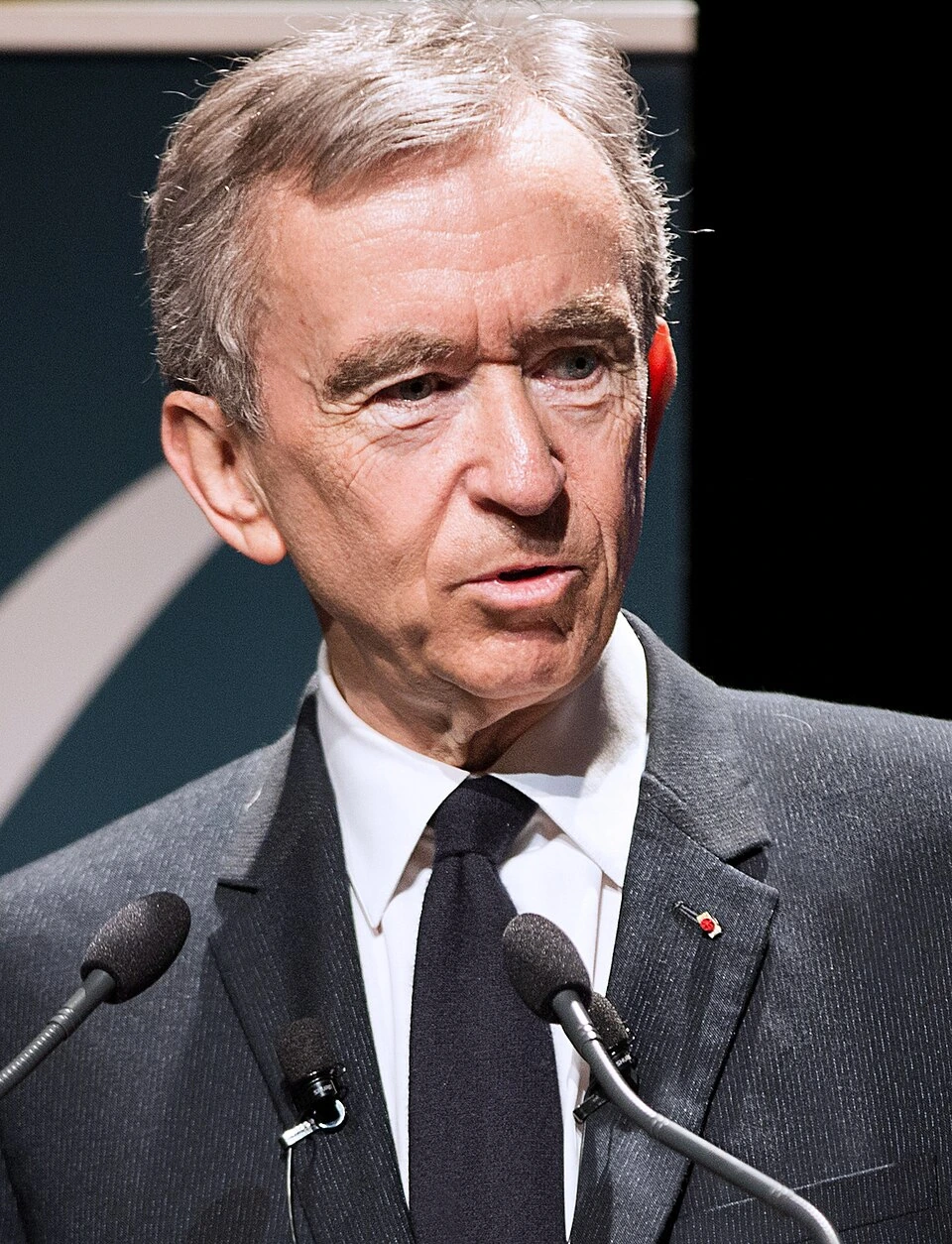
Louis Vuitton is the crown jewel inside that conglomerate, not a separate publicly traded company, which is why the phrase "Louis Vuitton Bernard Arnault net worth" blends three things that are closely connected but not the same. Let's sort that out first, then get into the numbers. If you are comparing other French luxury fortunes, you may also want to review bernard liautaud net worth as a related adjacent reference.
Louis Vuitton, Bernard Arnault, and LVMH: who's who

These three names are linked, but they are not interchangeable. Louis Vuitton is a brand, one of roughly 75 maisons (houses) that sit inside LVMH Moët Hennessy Louis Vuitton. LVMH is the publicly traded parent company, listed on the Paris stock exchange. Bernard Arnault is the person who controls LVMH and has led the group since 1989 as chairman and CEO, and holds the majority of voting rights.
Arnault does not own Louis Vuitton directly. What he owns (through a chain of family holding companies, most notably Agache and Christian Dior SE) is a controlling stake in LVMH. Because Louis Vuitton is by far the most valuable brand inside LVMH's Fashion and Leather Goods segment, a significant portion of LVMH's market capitalization is implicitly tied to Louis Vuitton's performance. That is the link between the brand and the billionaire's fortune.
LVMH's Fashion and Leather Goods segment, which includes Louis Vuitton alongside other maisons like Dior and Celine, generated approximately €37.8 billion in revenue in 2025. LVMH’s “Key figures” section includes a “FASHION & LEATHER GOODS” segment revenue table across years, which is where the 2025 figure shown on the page comes from LVMH’s “Key figures” section includes a Fashion & Leather Goods segment revenue table. That segment is the single biggest contributor to LVMH's overall earnings, which is why Louis Vuitton's health matters so much to the stock price, and therefore to Arnault's reported net worth.
Bernard Arnault's net worth today: the numbers and ranges
Two trackers dominate serious reporting on billionaire wealth: Forbes and Bloomberg. Both maintain dedicated profiles for Arnault that update regularly. As of early 2026, both have placed him in a broad range between roughly $150 billion and $200 billion, though the figure has fluctuated significantly over the past two years. Bloomberg reported that Arnault lost more paper wealth in 2024 than any other billionaire on earth, largely because LVMH's share price fell on softer luxury demand. That kind of move can wipe out or restore tens of billions in a matter of months.
For the most current single figure, the Forbes Real-Time Billionaires list and the Bloomberg Billionaires Index are the two places to go. Both show a live estimate and Arnault's global ranking. You can read more about the broader picture in the Bernard Arnault net worth profile, which tracks the longer-term trajectory of his wealth.
Why different sources show different figures

If you check Forbes and Bloomberg on the same day and see two different numbers, that is not a mistake. Each tracker uses a slightly different methodology, and those differences add up when the fortune involved is this large.
- Timing: Forbes updates its real-time list using Morningstar data and ADR pricing for international stocks, which can introduce small lags relative to Bloomberg, which uses the most recent closing price directly.
- Currency conversion: Bloomberg converts all holdings to U.S. dollars at current exchange rates. A shift in the euro-to-dollar rate can move Arnault's dollar-denominated net worth by billions even when the LVMH share price in euros stays flat.
- Debt and pledged shares: Bloomberg explicitly removes pledged shares and loans from its estimate and deducts taxes based on applicable tax rates. Forbes may apply different assumptions, producing a different bottom line.
- Holding structure complexity: Arnault owns LVMH through multiple layers of holding companies (Agache, Christian Dior SE). Estimating the exact economic interest flowing to him personally requires assumptions that vary by source.
- Snapshot timing: A figure quoted in a news article may be weeks old by the time you read it.
The practical takeaway is that any specific number you see should be treated as an approximation within a range, not a precise bank balance. When multiple credible sources show figures within 10 to 15 percent of each other, they are telling the same story.
How LVMH and Louis Vuitton actually drive the wealth calculation
The math is relatively straightforward once you understand the structure. Arnault, through his family holding companies, controls a majority stake in LVMH. A 2026 major shareholding notification reproduces the attributed Arnault family figures for LVMH shares and voting rights, including the reported 50.01% of capital and 65.94% of voting rights (as of Feb 19, 2026) major shareholding notification figures. Multiply that stake by LVMH's total market capitalization, subtract estimated debts and liabilities (including pledged shares), apply currency conversion, and you get the core of the net-worth estimate. Almost everything else is noise.
Because Louis Vuitton is the dominant revenue and profit driver within LVMH's Fashion and Leather Goods segment, investor sentiment about Louis Vuitton (new collections, price increases, Asia demand, tourist spending) flows directly into LVMH's stock price and therefore into Arnault's reported wealth. When analysts cut LVMH earnings forecasts due to slowing Chinese luxury demand, for example, LVMH shares fall, and Arnault's net worth falls with them. The reverse is equally true.
Arnault also reinforced his family's long-term grip on this structure in recent years by restructuring the Agache holding company into a joint-stock partnership, a legal form under French law that makes it much harder for outside shareholders to force a sale or change of control. That move was explicitly framed as protecting long-term family control over LVMH, and it matters for net-worth tracking because it signals that Arnault's stake is not likely to be diluted or sold in the near term.
What moves the number up or down

| Factor | Direction of impact | Why it matters |
|---|---|---|
| LVMH share price rise | Up | Arnault's stake is worth more in market terms |
| LVMH share price fall | Down | Same stake, lower valuation |
| Euro strengthening vs. dollar | Up (in USD terms) | Dollar-denominated trackers show a higher figure |
| Euro weakening vs. dollar | Down (in USD terms) | Same holdings, lower USD equivalent |
| Strong Louis Vuitton sales season | Up | Boosts LVMH earnings and investor confidence |
| Soft luxury demand (China, tourism) | Down | LVMH earnings miss expectations, stock falls |
| Share buybacks by LVMH | Up | Reduces share count, increases per-share value |
| New debt or pledged shares | Down | Bloomberg and others subtract these from estimates |
| Major acquisition by LVMH | Variable | Depends on deal terms and market reaction |
What net worth actually means here (and what it doesn't)
It is worth being clear about what these tracker figures represent, because it matters for interpreting them correctly. Arnault's reported net worth is almost entirely paper wealth, meaning it reflects the estimated market value of his equity stake in LVMH at a given moment. A Reddit thread explains that billionaire net worth is usually estimated from securities and publicly disclosed information, and some assets may not show up in the usual “rich lists.
” net worth is estimated from securities and publicly disclosed information. It is not cash.
He cannot spend $170 billion tomorrow. Liquidating even a fraction of a controlling stake in a major public company would require regulatory disclosure, shareholder approval in many scenarios, and would likely move the share price significantly just by the act of selling.
What he does have is real financial power: the ability to borrow against those holdings (using pledged shares as collateral), to direct capital allocation inside LVMH, to collect dividends (LVMH pays a meaningful annual dividend), and to make acquisitions through LVMH's balance sheet. The net-worth figure is best understood as a measure of wealth concentration and control, not a liquid bank balance.
Arnault's children also play roles inside the LVMH empire, with several holding senior executive positions across different maisons. Their own stakes and compensation add separate layers of Arnault-family wealth. For example, Frédéric Arnault's net worth reflects his growing role within the group, and similarly Jean Arnault's net worth is tracked separately as he takes on leadership responsibilities. These are distinct from Bernard Arnault's personal figure, though they all trace back to the same LVMH foundation.
How to check and track the number yourself
Checking Arnault's current net worth takes about two minutes if you know where to look. Here is the most reliable approach:
- Go to the Forbes Real-Time Billionaires list or search 'Bernard Arnault Forbes' directly. The profile page shows a real-time net worth figure and a chart of his wealth history. Forbes updates this continuously during market hours.
- Cross-check with the Bloomberg Billionaires Index by searching 'Bloomberg Billionaires Bernard Arnault.' The page shows Bloomberg's estimate and a breakdown of the underlying holdings and methodology.
- Check LVMH's share price on the Paris exchange (ticker: MC) to understand where the stock is trading. Since Arnault's wealth is almost entirely LVMH equity, a 5 percent stock move means roughly a 5 percent change in net worth.
- For quarterly context on what is driving LVMH's valuation, look at the LVMH full-year or half-year results releases. The Fashion and Leather Goods segment revenue is the single most watched line for Louis Vuitton-related performance.
- When reading news articles that quote a net-worth figure, check the article date. A figure cited in a piece from three months ago may be significantly different from today's number given LVMH's share-price volatility.
One thing worth noting: aggregators like Oxfam and academic research papers often cite Forbes real-time data as their source for billionaire wealth figures. So if you see a number quoted in a secondary report, you can almost always trace it back to either Forbes or Bloomberg as the original source, and you can verify it there directly.
How to read press reports on Arnault's wealth
News headlines about Arnault's wealth tend to focus on dramatic changes: 'Arnault loses $10 billion in a week' or 'Arnault surpasses Musk as world's richest person.' These headlines are technically accurate as snapshots but can be misleading without context. A $10 billion loss on paper, when you started with $170 billion, is roughly a 6 percent move in LVMH stock. That is not an unusual week for a large-cap stock. The scale of the fortune makes even routine market moves sound extraordinary. Frédéric Kanouté net worth can be tracked using the same kind of Forbes and Bloomberg wealth-estimate methods, but his holdings and role determine how the numbers move.
The more meaningful signals to watch are: persistent multi-quarter trends in LVMH's Fashion and Leather Goods segment revenue (Louis Vuitton's home), changes to Arnault's ownership structure or voting control, major acquisitions or divestitures by LVMH, and shifts in the euro-dollar exchange rate that affect how U.S.-based trackers report the dollar figure. Those are the factors that produce lasting changes to the wealth estimate, not daily stock fluctuations.
FAQ
Is “Louis Vuitton Bernard Arnault net worth” referring to the value of Louis Vuitton the brand or Bernard Arnault’s stake in LVMH?
It is almost always an estimate of Bernard Arnault’s wealth tied to his controlling stake in LVMH. Louis Vuitton is not a standalone public company, so any “Louis Vuitton” net worth figure you see in this context is really being inferred from how Louis Vuitton performs inside LVMH.
Why can Forbes and Bloomberg show noticeably different numbers on the same day for Arnault?
They use different inputs, such as how they value cross-holdings and private assets, and how they treat control premiums or pledged shares. Currency conversion timing can also create small gaps, even when both are using essentially the same LVMH share price.
If Arnault’s net worth is mostly “paper wealth,” can he ever turn it into cash quickly?
He can access liquidity through borrowing against his shares (often using pledged shares as collateral) and through dividends, but selling a controlling stake is slow and expensive. Regulatory disclosures and market impact would typically move the stock price before the sale is completed.
Do changes in Louis Vuitton sales always translate into changes in Arnault’s net worth?
Not instantly and not one for one. The market updates expectations about margins, pricing power, and regional demand (especially Asia and tourist spending). Arnault’s estimate moves mainly when LVMH’s outlook changes enough to reprice the stock.
How should I interpret a headline like “Arnault lost $X billion in a week”?
Treat it as a reflection of LVMH share price movement over a short period, not a change in the underlying business overnight. For a company like LVMH, a several-percent stock move can translate to very large dollar swings in wealth estimates.
What ownership restructuring could affect long-term net worth tracking for Arnault?
Legal and structural changes that affect voting control or dilution risk can shift how trackers model the value of his holdings. In Arnault’s case, changes in how family holdings are organized can matter more for control and valuation assumptions than day-to-day brand news.
Do Arnault’s children’s roles inside LVMH mean their net worth gets counted twice in Bernard’s figure?
Trackers generally separate individual family members. Bernard’s figure is meant to reflect his own ownership and compensation, while children’s stakes and salaries are reflected in their own reported net worths.
Does the euro-to-dollar exchange rate meaningfully change reported “net worth” even if LVMH performance is flat?
Yes. Because many trackers report in USD, movements in the EUR-USD rate can change the dollar value of the same underlying equity stake. This can create short-term changes that are not tied to luxury demand.
What if I see an Oxfam or academic report quoting an Arnault number, but it differs from Forbes or Bloomberg?
Many secondary sources reuse a snapshot from Forbes or Bloomberg rather than recalculating in real time. Check the date of the cited figure, because billionaire estimates can swing materially month to month.
Which data points are most useful if I want to monitor whether Arnault’s wealth is heading up or down over quarters?
Focus on sustained trends in LVMH’s Fashion and Leather Goods revenue and margins, changes in management commentary about demand regions, major LVMH capital allocation moves (acquisitions, big divestitures), and any meaningful update to Arnault’s control or stake structure.