Frédéric Arnault's net worth is not publicly confirmed by the man himself, but estimates place it somewhere in the range of $1 billion to several billion dollars, depending on how the analyst allocates LVMH-linked family wealth. The honest answer is that the number is hard to pin down precisely, and the reason why is actually pretty interesting. Here is what we know, how the estimates are built, and where to check for the most current figures.
Frédéric Arnault Net Worth: How LVMH Wealth Is Valued Today

Laurent Devereaux
27 Mar 2026

Who Frédéric Arnault is

Frédéric Arnault is one of Bernard Arnault's five children and arguably one of the most operationally active of the siblings within the LVMH empire. Born in 1995, he studied at École Polytechnique before entering the family business. He is not simply a passive heir sitting on a trust; he has taken on major executive roles and is climbing the ranks of LVMH's operational structure at a pace that is unusual even by Arnault-family standards.
His career escalated quickly. Bloomberg reported in June 2020 that LVMH named him CEO of TAG Heuer, effective July 1 of that year. He was 25. Then in January 2024, Forbes reported that he was elevated to CEO of LVMH Watches, overseeing the full grouping of TAG Heuer, Hublot, and Zenith. Most recently, Vogue reported he also became CEO of Loro Piana, the ultra-luxury Italian cashmere brand, as part of a broader executive reshuffle of Arnault family roles across LVMH. Wikipedia confirms the Loro Piana appointment dates to 2025, where he succeeded Damien Bertrand.
Beyond his operating roles, Frédéric also holds a governance position. LVMH proposed his appointment to the company's Board of Directors at its Annual General Meeting on April 18, 2024, alongside his brother Alexandre. And separately, he was named managing director of Financière Agache, the family holding company that sits at the top of the Arnault control structure above LVMH. That last point matters a lot when you try to work out what his wealth actually looks like.
How analysts estimate his net worth
Net worth for someone like Frédéric Arnault is not calculated from a bank statement. It is an estimate, assembled from publicly available signals. Here is how that typically works for someone in his position.
The starting point is equity ownership. If a person holds shares, directly or indirectly, in a publicly traded company like LVMH, analysts multiply the number of shares by the current market price. blank" rel="noopener noreferrer">LVMH trades on Euronext Paris under the ticker MC, so its share price is publicly available in real time. The math is straightforward once you know the shareholding percentage, but that figure is where it gets complicated for a second-generation family member.
Forbes, for instance, has stated clearly in its methodology that it attributes the value of all family LVMH shares to Bernard Arnault, because Bernard controls the structure. This means that on Forbes' billionaires list, Frédéric does not carry a separate LVMH-linked fortune, because the shares are counted as Bernard's for tracking purposes. Bloomberg's Billionaires Index takes a similar approach. For trackers that do assign individual estimates to the Arnault children, those figures tend to rely on indirect inferences: disclosed incentive compensation, estimated bonuses, disclosed positions in affiliated entities, and educated assumptions about family trusts.
The holding structure itself adds layers. A December 2021 Financière Agache prospectus stated that Agache controlled, directly and indirectly, 47.3% of the share capital and 63.2% of the voting rights of LVMH as of December 1, 2021. LVMH in turn controls brands worth hundreds of billions in enterprise value. Frédéric's role as managing director of Agache signals genuine proximity to that wealth, but it does not automatically translate into a clean, verified personal stake figure.
Frédéric Arnault's estimated net worth today

As of March 2026, Frédéric Arnault does not appear on major real-time billionaire trackers as an independent entry the way his father does. Most estimates for the Arnault children as individuals sit in the range of roughly $1 billion to $5 billion per sibling, based on indirect holdings, incentive awards, and analyst assumptions about how Financière Agache's underlying value is distributed across the family. For a clearer baseline, you can also review how Bernard Liautaud net worth is typically estimated from the same LVMH shareholding structure and market pricing Bernard's total fortune. Some outlets have published higher figures by applying a simple fraction of Bernard's total fortune across his five children, but those are rough approximations rather than verified disclosures.
For context, Bernard Arnault's net worth has been tracked by Forbes and Bloomberg in the range of $150 billion to over $200 billion at various points in 2023 and 2024, though it moves significantly with LVMH's share price. Forbes described a single earnings report triggering a $19 billion overnight move in Bernard's tracked wealth, which illustrates just how sensitive these numbers are to market conditions.
Because figures shift with the market and because different trackers use different methodologies, the best way to get the most current estimate is to check Forbes Real-Time Billionaires, Bloomberg's Billionaires Index, and dedicated wealth tracking sites on the same day. Forbes updates its real-time list daily based on market data, which is why a figure you see today may differ from one published last week.
What actually drives his wealth
For Frédéric, wealth drivers fall into a few distinct categories. The most significant by far is his indirect exposure to LVMH through the Arnault family holding structure. Even if he does not personally own a publicly disclosed percentage of LVMH shares on the open market, his role at the top of Financière Agache and his position within the family means his economic interests are deeply tied to LVMH's performance.
LVMH's market capitalization has fluctuated between roughly 300 billion euros and over 500 billion euros over the past few years, depending on luxury-market conditions and macro factors. Any material allocation of that value to Frédéric, even a fraction of a percent, produces a very large number. This is why small changes in LVMH's stock price have outsized effects on wealth estimates for everyone in the Arnault orbit.
Beyond passive holding value, his executive compensation as CEO of LVMH Watches and now Loro Piana also contributes. Top-tier luxury group executives at LVMH earn substantial base salaries plus performance bonuses and long-term incentive plans that can include stock options or share awards in LVMH or affiliated entities. These figures are not publicly disclosed at the individual level for subsidiary CEOs, but they are material contributors to personal net worth over time.
His board seat at LVMH, proposed in April 2024, adds a governance layer that typically comes with director fees and enhanced access to information relevant to long-term wealth management. It also reinforces his formal standing within the group's decision-making structure, which has its own economic implications.
Career moves that matter for his fortune
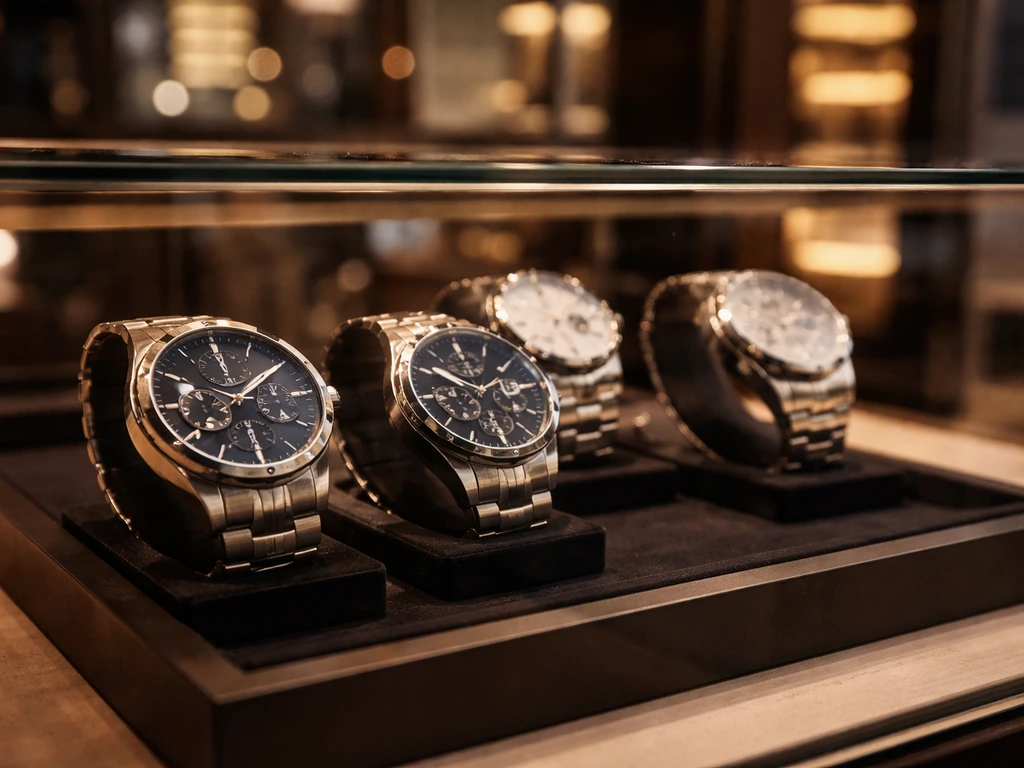
Each promotion Frédéric has received is not just a title change. It shifts his compensation, his strategic responsibility, and his visibility as a future steward of the LVMH empire, all of which feed into how analysts think about his long-term wealth trajectory.
Taking over TAG Heuer at 25 in 2020 was a genuine operational bet by Bernard Arnault. TAG Heuer competes in the sports and entry-luxury watch segment against formidable Swiss rivals. Running that brand gave Frédéric real P&L responsibility and brand management experience that translates directly into credibility within the group.
The step up to CEO of LVMH Watches in January 2024 expanded that remit dramatically. He now oversees not just TAG Heuer but also Hublot (known for its Big Bang range and high-margin limited editions) and Zenith (a historic Swiss manufacture with strong in-house movement credentials). Managing three distinct watch brands simultaneously, each with its own positioning and customer base, is a significant organizational challenge and signals Bernard's confidence in his son's capabilities.
Adding Loro Piana to his portfolio in 2025 is the most interesting move yet. Loro Piana is one of LVMH's highest-margin brands, known for rare fibers like vicuña and baby cashmere and a deliberately low-profile, ultra-high-net-worth clientele. Managing it alongside LVMH Watches suggests Frédéric is being groomed for broader executive authority rather than narrow sector specialization. Each of these moves increases his compensation potential and strengthens his case as a long-term wealth generator within the family structure.
Where Frédéric sits in the Arnault family wealth picture
Understanding Frédéric's position requires understanding the whole family structure first. Bernard Arnault has five children: Delphine, Antoine, Alexandre, Frédéric, and Jean. All five are active within LVMH in various capacities, which is unusual for a conglomerate of this scale and a deliberate strategy by Bernard to prepare multiple potential successors.
| Family Member | Role (as of 2025–2026) | Wealth Tracking Status |
|---|---|---|
| Bernard Arnault | Chairman and CEO, LVMH | Tracked independently by Forbes and Bloomberg; estimated $150B–$200B+ range in recent years |
| Delphine Arnault | CEO, Christian Dior Couture; LVMH Board | Not tracked independently; wealth inferred from family structure |
| Antoine Arnault | CEO, Berluti; Head of Image and Environment, LVMH | Not tracked independently; wealth inferred from family structure |
| Alexandre Arnault | Executive VP, Tiffany & Co. | Not tracked independently; wealth inferred from family structure |
| Frédéric Arnault | CEO, LVMH Watches and Loro Piana; Managing Director, Financière Agache | Not tracked independently; estimated $1B–$5B+ range by various outlets |
| Jean Arnault | Director of Marketing and Product Development, Louis Vuitton Watches | Not tracked independently; estimates vary widely |
The key point here is that Forbes attributes the entire value of the family's LVMH shareholding to Bernard, not to his children. This is because Bernard controls the structure through Financière Agache and Christian Dior SE as intermediate holdings. The children's individual fortunes, while substantial, are effectively subordinate to that control structure until ownership is formally redistributed, whether through gifts, inheritance, or restructuring.
Among the siblings, Frédéric's combination of the Financière Agache managing director role and his dual CEO responsibilities at LVMH Watches and Loro Piana arguably makes him one of the most economically exposed to LVMH's performance on a day-to-day operational basis. Jean Arnault's net worth is even harder to pin down given his narrower role so far, though both brothers are clearly being positioned for expanded authority over time.
What separates Frédéric from his siblings in wealth terms right now is probably a combination of longer executive tenure (he has been running brands since 2020), more operating units under his direct control, and his formal governance role at Agache. None of that translates into a simple public number, but it does suggest his personal fortune is at the higher end of estimates for the second generation.
How to check his net worth right now
The most practical approach for staying current is to use a combination of sources rather than relying on any single tracker. Forbes Real-Time Billionaires updates daily and is the most frequently cited benchmark for this family, though remember it consolidates LVMH share value under Bernard rather than assigning separate entries to his children. Bloomberg's Billionaires Index is the main alternative and sometimes differs materially from Forbes due to methodology differences.
For LVMH-specific context, watching the MC share price on Euronext Paris gives you a real-time proxy for how the underlying asset base is moving. A 5% move in LVMH's stock price ripples through all wealth estimates for the Arnault family, including the indirect estimates for Frédéric. The Louis Vuitton and Bernard Arnault wealth connection is the clearest illustration of how tightly personal fortune tracks LVMH's market performance for this family.
Any figure published more than a few weeks ago should be treated as a directional estimate, not a precise current number. That applies to this article too. The Arnault family's wealth is one of the most market-sensitive fortunes in the world, and the most accurate snapshot is always the one you calculate yourself using today's LVMH share price and the best available ownership estimates.
FAQ
Why don’t real-time billionaire lists show a separate Frédéric Arnault net worth number the same way they do for Bernard Arnault?
Many trackers treat Frédéric’s LVMH-linked wealth as part of the control structure that they attribute to Bernard, especially when the family holdings are consolidated under Financière Agache and intermediated entities. So the “separate entry” issue is often a methodology choice (attribution), not proof that Frédéric has zero personal assets.
If I want to estimate frédéric arnault net worth myself, what inputs matter most?
Start with (1) current LVMH share price on Euronext Paris, (2) the estimated economic allocation to the second generation (often derived from disclosures tied to family holding companies and incentives), and (3) any separately held assets outside the LVMH structure. The biggest swing usually comes from the LVMH share price sensitivity, because even a small assumed allocation becomes large at market scale.
How sensitive are his net-worth estimates to changes in LVMH’s stock price?
Very. A rough decision aid is to assume that a 5% move in LVMH can translate into a similar order-of-magnitude percentage change in the LVMH-linked portion of any estimate, then reduce it based on how much of the estimate is actually attributed to him versus attributed to Bernard by that tracker.
Why do different outlets disagree on whether frédéric arnault net worth is closer to $1 billion or $5 billion?
They typically disagree on the allocation rules, not on the stock price. Some methods allocate only compensation-derived value plus indirect roles, while others apply a simplified fraction of the parent fortune across siblings. That “fraction” approach can inflate totals because it may ignore how voting control and economic rights are structured through holding companies.
Do executive roles at TAG Heuer, LVMH Watches, and Loro Piana automatically mean he owns LVMH shares personally?
Not automatically. High-level CEOs can earn cash salary plus bonuses and long-term incentives, but individual share ownership is not always disclosed for subsidiary leadership roles. As a result, his compensation can raise net worth over time, but it may not show up as a clearly measurable, publicly reported LVMH share percentage today.
Does his managing director role at Financière Agache prove a specific net-worth amount?
It strongly indicates economic proximity, but it does not confirm a specific personal ownership percentage. Agache’s control of voting and share capital can be separated from the personal economic entitlements attributed to individual family members, which is exactly why estimates remain range-based.
What is the main “gotcha” when using billionaire trackers for frédéric arnault net worth?
Treating a tracker’s attribution model as a literal accounting of who owns what. If the methodology consolidates the family’s LVMH share value under Bernard, Frédéric may not appear as a separate line item even if he has meaningful exposure. Always check whether the tracker assigns wealth by ownership, by attribution, or by inferred compensation.
How can I tell whether a published figure is outdated or still reasonable today?
Look at the publication date and compare it to current LVMH performance. Even if the allocation assumptions are unchanged, market moves can rapidly change the estimate. A practical rule is that anything older than a few weeks is usually directional unless it explicitly recalculates using current LVMH share price and the latest ownership method.
Is it possible that his net worth increases even if LVMH stock stays flat?
Yes. Compensation components such as bonuses, long-term incentive vesting, and any restructuring or redistribution through the holding structure can change his personal wealth independent of a day-to-day share price move. Track appointment changes and reported incentive-related disclosures when trying to explain updates that don’t line up with market moves.