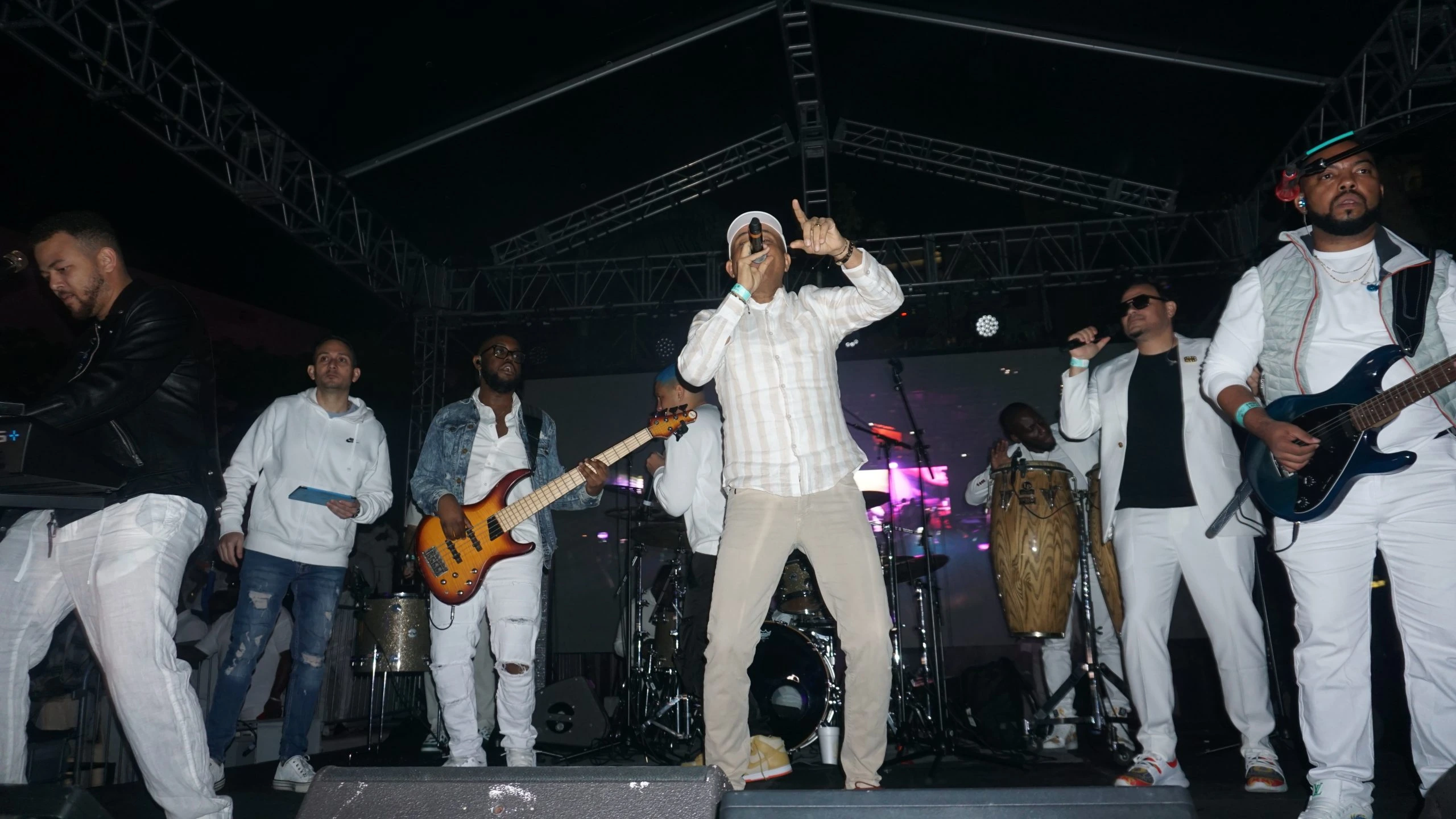
It is worth being precise here because "Martelly" is a surname that carries enormous weight in Haitian public life. Searches sometimes blur the lines between Olivier, his father Michel, and other family members. Wikipedia is explicit on this: Olivier Martelly (the musician) is a distinct person from his father the politician, even though they share the surname and often appear in the same news cycles. If you are researching the former president's finances specifically, that is a different trail. For Haitian celebrity net worth profiles more broadly, the same disambiguation problem comes up repeatedly, so it is always worth confirming which family member a source is actually discussing.
Why putting a number on his net worth is genuinely difficult
Olivier Martelly does not have the kind of public financial footprint that makes net worth easy to estimate. He is not a publicly traded company executive, he has not published audited financial statements, and his music career discography is, by Wikipedia's own characterization, relatively unknown outside Haiti. Public data about him is extremely limited, which is not a tabloid observation but something even reference sources acknowledge directly.
There is also a structural problem. His family background means that reporting about him frequently mixes his finances with allegations or documented disclosures about his parents. A 2015 report cited in Haiti's corruption coverage described Olivier as having "no real job" but "plenty of money," and referenced cars and prime real estate. That is a red flag for researchers: a vague qualitative claim with no supporting numbers or methodology is not a net worth estimate. It is an impression. A Haiti Observateur excerpt from 2016 circulates a figure suggesting his "share" exceeded 50 million (the currency and methodology are unspecified), but that kind of number, without supporting documentation, tells you very little.
The family's legal exposure adds another layer of complexity. Haiti's anti-corruption agency, the ULCC, has probed the Martelly family's assets, and U.S. Treasury OFAC sanctions were imposed on former President Michel Martelly in connection with drug trafficking allegations. These investigations create situations where assets may be contested, frozen, transferred, or obscured, making any snapshot estimate of Olivier's personal wealth even less reliable than it would normally be for a private individual.
What sources actually say, and how much to trust them
Let me walk through the main categories of sources you will encounter when you search this topic, and what each one is actually worth.
Net worth aggregator sites

Sites like HaitiOpen and similar profile pages will state a net worth figure, often confidently, with no sourcing. These numbers are typically drawn from other aggregator sites or from unverified blog posts. They use narrative biography as a proxy for wealth, which is not a valid methodology. Treat these figures as placeholders, not facts.
Some tools estimate "net worth and earnings" based on Instagram or TikTok engagement metrics and assumed sponsorship rates. These are essentially influencer revenue models, not asset-based net worth calculations. They do not account for real estate, business equity, investments, or liabilities. They measure online reach, not financial standing.
Press releases

Press releases from Accesswire and similar newswire services have linked Olivier Martelly to Big O Productions and described performances and artist representation. These establish career context but contain no balance-sheet information. They are marketing documents, not financial disclosures.
Corporate registries
This is where things get a little more concrete. Florida's Sunbiz registry lists BIG O MUSIC PRODUCTION, L.L.C., with "MARTELLY, MICHEL OLIVIER" as an authorized person and manager. The entity was filed on February 5, 2014, and is currently listed as inactive following dissolution for an annual report. This is a legitimate primary source. It confirms a legal business connection to that name, but it does not tell you revenue, profit, or the owner's personal assets.
Investigative and anti-corruption reporting

Gazette Haiti's coverage of ULCC findings is more substantive than most. It reports that 400 shares in M6 Consult S.A., valued at a total of 2,000,000.00 (Haitian gourdes), were transferred by Michel-Olivier Martelly (listed as president of that company) to Sophia Martelly on April 2, 2015. That is a documented asset transfer, not a rumor. It is still not a complete net worth figure, but it is a data point you can point to and cite. Investigative reports like this are the closest thing to verified financial information available for Olivier Martelly.
Building a rough estimate from what is verifiable
When public information is sparse, analysts typically work from proxies: known income streams, documented asset holdings, business valuations, and comparable figures from peers in the same industry and geography. Here is what that looks like for Olivier Martelly specifically.
- Music production income: Big O Productions was an LLC in Florida, now inactive. For a small, privately held music production company in the Caribbean diaspora market, annual revenues rarely exceed a few hundred thousand dollars unless there are major label deals or touring revenue. There is no public evidence of either at scale.
- Real estate: The 2015 corruption reporting referenced "prime real estate" without specifying location, value, or ownership structure. Without deed records or mortgage disclosures, this cannot be quantified.
- Corporate shareholdings: The M6 Consult S.A. share transfer documented by Gazette Haiti puts a specific gourde-denominated value on one transaction. At 2015 exchange rates, 2,000,000 Haitian gourdes converted to roughly $40,000–$45,000 USD. That is a floor on at least one documented asset, not a ceiling on total wealth.
- Family wealth adjacency: Olivier's parents, especially his father, have been the subject of much more extensive financial scrutiny. Some of that wealth may flow through family structures, but without verified documentation, attributing parental or family assets to Olivier personally is speculation.
- Advisory and institutional roles: A UN document lists "Michel Olivier Martelly" as a youth and sports adviser, which suggests some institutional engagement, though public sector advisory roles in this context rarely represent significant income.
Taking all of this together, a responsible range for Olivier Martelly's personal net worth today would be somewhere between $500,000 and $5 million, acknowledging that almost every component of that range is unverified. The Haiti Observateur's suggestion of a figure exceeding $50 million is not corroborated by any primary documents that are publicly available. That does not mean it is false, but it means you cannot responsibly repeat it as fact.
Family connections and wealth channels worth examining
Understanding Olivier's financial picture really requires understanding the broader Martelly family network. His father Michel Martelly's presidency from 2011 to 2016 placed the family at the center of Haitian economic and political power. That context matters because wealth in families with political influence often flows through indirect channels: contracts awarded to family-connected businesses, real estate appreciated through insider knowledge of development plans, or shareholdings in companies that benefit from regulatory decisions.
The ULCC investigation cited by Haiti Wire explicitly named Michel Olivier Martelly alongside his parents in an asset probe. This is significant not because it proves wrongdoing, but because it confirms that investigators believed there were assets worth examining. Similarly, the OFAC sanctions on his father create a compliance environment where any U.S.-based financial activity by connected family members would be scrutinized. This is the kind of backdrop that makes wealthy families move assets through holding companies, trusts, or offshore structures, all of which reduce the visibility of personal net worth.
For comparison, it helps to look at how wealth and power intertwined for other figures in Haitian political history. The finances of Jean-Claude Duvalier and the documented controversies around Jean-Bertrand Aristide show a recurring pattern: political families in Haiti often accumulate wealth through opaque channels that only surface during investigations or transitions of power. The Martelly family appears to fit a similar pattern, at least based on what has been reported publicly.
Another angle worth noting is the broader Haitian business elite. Figures like Laurent Saint-Cyr in Haiti represent a different kind of wealth accumulation: private sector, longer-term, and more publicly documented. Comparing those profiles to the Martelly family's trajectory helps illustrate how differently wealth is built and tracked depending on whether the source is politics or commerce.
The net worth misinformation ecosystem around figures like Olivier Martelly is predictable once you know what to look for. Here are the patterns that should trigger skepticism.
- Round numbers with no sourcing: Any figure like "$10 million" or "$50 million" that appears without a cited methodology or primary document is almost certainly copied from another aggregator site. These numbers travel across the internet without anyone ever verifying them.
- Biography treated as balance sheet: Saying someone is the son of a president, or runs a music company, tells you nothing specific about their personal wealth. Do not let narrative context substitute for financial evidence.
- Conflation with family members: Always check whether a number attached to "Olivier Martelly" is actually about his father Michel or the family unit collectively. The names are similar enough that mistakes and deliberate blurring both happen.
- Social media engagement metrics presented as net worth: If a site is using follower counts or engagement rates to derive a "net worth" figure, that is not a financial estimate. It is a marketing metric dressed up to look like one.
- Absence of dates: Net worth is a snapshot. A figure from 2016, when the family was still closely tied to state power, is not the same as a figure for 2026, especially given sanctions and investigations in the intervening years.
Cross-checking across genuinely independent sources is the only reliable corrective. If a number appears on three net worth sites, but all three trace back to the same original blog post, you have one source repeated three times, not three sources confirming one number. Look for documents that predate the aggregators: registry filings, court records, investigative journalism with named sources, or official disclosures.
It is also worth keeping in mind that political wealth in the Francophone Caribbean world shares characteristics with political wealth elsewhere in the Francophone sphere. Even examining something as well-documented as a French president's net worth involves navigating between official declarations and off-balance-sheet realities. The methodology challenges are the same; the documentation quality differs.
Comparing what we know across similar profiles
To put Olivier Martelly's situation in context, here is how the available evidence for his net worth compares to a few related figures whose profiles face similar research challenges.
| Figure | Primary wealth source | Documentation quality | Net worth confidence |
|---|
| Olivier Martelly | Music production, family connections, possible asset holdings | Corporate registry (inactive LLC), one documented share transfer, investigative reporting | Low — wide range, minimal primary verification |
| Michel Martelly (father) | Political career, business associations, reported holdings | ULCC disclosures, OFAC sanctions, investigative journalism | Low-medium — more documented but contested |
| Jean-Claude Duvalier | State expropriation, offshore accounts | Swiss court records, international investigations | Medium — documented but historically disputed |
| Jovenel Moïse | Agriculture and export business, presidential salary | Some corporate records, limited financial disclosures | Low — little verified personal wealth data |
The pattern here is consistent: political families in Haiti generate intense wealth speculation but leave behind limited verifiable documentation. For context on the last entry in that table, the Jovenel Moïse net worth question faces the same structural problem as Olivier Martelly's, with researchers piecing together incomplete corporate and property records. Similarly, the financial profile of Laurent Gbagbo in Côte d'Ivoire shows how even when official investigations exist, translating that into a confirmed personal net worth number remains elusive.
Where to look and how to keep the estimate current
If you want to do this research seriously rather than just absorbing whatever number a net worth site gives you, here are the specific places to look and what to do with what you find.
- Florida Sunbiz (sunbiz.org): Search for "Michel Olivier Martelly" and any associated company names. Note filing dates, registered agents, and dissolution events. This is free, public, and primary. BIG O MUSIC PRODUCTION, L.L.C. is already documented there.
- Haiti ULCC reports: The Unit de Lutte contre la Corruption publishes findings and recommendations. These are the closest thing Haiti has to a financial disclosure regime for politically exposed persons. Reports may be in French and require translation, but they carry more evidentiary weight than any aggregator site.
- U.S. OFAC sanctions list: Check the SDN (Specially Designated Nationals) list at treasury.gov for any Martelly family members. Sanctions entries often include identifying information and associated entities that can anchor further research.
- Haitian civil and corporate records: Haiti's business registry (Registre du Commerce) and notarial records can surface company presidencies, share transfers, and property transactions. Access is inconsistent, but investigative outlets like Gazette Haiti and Haiti Wire sometimes publish document excerpts.
- Investigative journalism archives: Search Haiti Wire, Gazette Haiti, Haiti Liberté, and Miami New Times archives specifically for "Michel Olivier Martelly" (not just "Olivier Martelly") to reduce results about the father. Miami New Times has done substantive long-form coverage of the Martelly family's business and social context.
- UN and international organization directories: The UN document ST/SG/SER.C/L.620 lists institutional roles. Cross-reference any advisory or representative position for compensation disclosures or expense records where available.
- Property records: If you believe he holds real estate in Florida or elsewhere in the U.S., county property appraiser databases (Miami-Dade, Broward, etc.) are searchable by owner name. These are free and provide assessed values.
Once you collect these pieces, build a simple log: source name, date accessed, what it confirms, and what it cannot confirm. That discipline separates a real estimate from a recycled number. Update the log whenever a new investigation, sanction, or corporate filing surfaces. Wealth pictures for politically connected individuals can shift quickly, especially when legal proceedings are active.
A final note: some of the most useful context for understanding figures like Olivier Martelly comes from looking at comparable cases. The Eric Jean Baptiste Haiti net worth profile is another example of a Haitian public figure where financial information is fragmented across different types of sources, and the research methodology is largely the same: start with official registries, layer in investigative journalism, and treat aggregator sites as hypotheses to test rather than facts to cite.