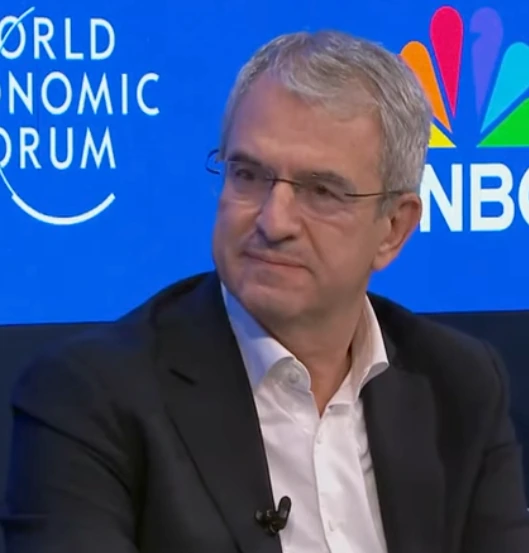
Here is what makes his wealth genuinely difficult to pin down: Freixe is a professional manager, not an entrepreneur-owner in the mould of Bernard Arnault or François Pinault. He did not build Nestlé and does not control a large block of its shares. His money comes from salary, bonuses, long-term incentive plans, and whatever personal investments he has made over the years. None of that is neatly listed in a single public document, and unlike publicly traded billionaires whose wealth moves with a stock price, his net worth requires piecing together information from several imperfect sources.
There is also a very significant recent development: Le Parisien reported that Nestlé terminated Freixe's employment, citing an undeclared romantic relationship with a direct subordinate. That changes the financial picture considerably, because a CEO dismissal for cause can affect severance entitlements, unvested long-term incentive packages, and future earning potential. As of April 2026, any estimate of his wealth needs to account for this event.
What his money likely comes from

For a senior Nestlé executive who spent nearly 40 years at the company and ultimately became its CEO, the main wealth drivers are straightforward. Base salary at Nestlé CEO level runs into the millions of Swiss francs annually, and that is before annual bonuses and performance-linked long-term incentive awards that can easily double or triple total compensation in a good year. Nestlé publishes aggregate compensation data for its executive board in its annual report, which gives a useful benchmark even when individual breakdowns are not fully itemised.
Beyond the regular pay, executives at this level typically accumulate Nestlé shares through equity compensation plans over many years. Freixe held senior roles including head of the Americas zone and head of the Europe, Middle East and North Africa zone before becoming CEO, meaning he would have been in high-compensation brackets for at least a decade before his appointment. That timeline suggests a meaningful stock accumulation, though the exact size of his holdings is not publicly disclosed in a precise way.
Real estate and personal investments are harder to assess from outside. French executives of his profile often hold property in Paris and possibly in Switzerland, where Nestlé is headquartered in Vevey. Whether he has invested in private equity, venture funds, or other assets is simply unknown from public data. The honest answer is that the non-compensation portion of his wealth is a black box.
Best sources to verify net worth in France (and what to trust)
France does not have a public register that lists individual wealth the way some countries publish land registry data. That said, there are credible places to look. blank" rel="noopener noreferrer">Nestlé's annual reports and compensation reports, which are publicly available on Nestlé's investor relations pages, are the most reliable primary sources. They show total executive board pay and sometimes individual figures for the CEO. Swiss disclosure rules are stricter than French ones for listed companies, which actually helps here since Nestlé is listed on the Swiss exchange.
French business registries like Infogreffe and Societe.fr can show you if Freixe holds directorships or ownership stakes in French companies, though these are most useful for founders and entrepreneurs rather than career managers. INSEE and French tax authority data are not public at the individual level. For broader context on French executive wealth patterns, credible outlets like Les Echos, Le Figaro Économie, and Usine Nouvelle (which covered his appointment) are worth checking for interview quotes and compensation context.
Wealth trackers like Forbes or Bloomberg Billionaires are useful, but they focus on billionaires with measurable equity stakes. Freixe is almost certainly not on their lists. For executives at his level, the most useful cross-reference is pay benchmarking reports from compensation consultancies, which sometimes appear in business journalism. Do not rely on random net-worth websites that quote specific figures without citing a methodology: those numbers are almost always fabricated or heavily estimated without disclosure.
How to estimate net worth from available public data

Here is a practical step-by-step approach you can actually use, rather than a theoretical framework.
- Pull Nestlé's annual reports for the years Freixe served as a named executive (typically the last 5 to 10 years of senior roles). Look at the executive compensation tables for his zone leadership roles and then for his CEO year.
- Note total compensation figures in Swiss francs (CHF) for each year. Add these up as a rough gross earnings estimate, keeping in mind taxes in both France and Switzerland are significant.
- Apply an estimated effective tax rate. Senior French executives typically face effective rates of 45 to 55 percent across income and social charges. This gives you a post-tax accumulated income range.
- Estimate equity accumulation by looking at any disclosed Nestlé share grants in the compensation reports. Multiply share quantities by Nestlé's current share price (traded on the Swiss exchange as NESN) to get a rough equity value.
- Subtract a reasonable living cost estimate over his career years. This is imprecise, but for executives at this level, total lifestyle costs including property, travel, and family are material.
- Factor in his termination. If his dismissal was for cause, some unvested equity awards and severance entitlements may have been forfeited. This is a meaningful downward adjustment.
- Add a rough estimate for personal assets (property, savings) based on his career tenure and lifestyle profile. Be conservative here since you have no hard data.
This process is imperfect by design. You are building an estimate from incomplete public data, and that is the honest reality. Anyone claiming to know his precise net worth is bluffing.
Why net-worth numbers online can be wildly different
Name confusion is a real problem with a name like Laurent Freixe. There are other prominent French figures named Laurent in business and public life, and low-quality net-worth sites frequently mix up profiles or copy numbers between similar names without verification. For example, profiles of Laurent Blanc, the football manager, or other well-known French Laurents get blended into search results and sometimes into actual content on careless sites.
Outdated claims are another major issue. A figure published in 2022 for a senior Nestlé zone executive will look very different from what his wealth picture looked like in late 2024 after becoming CEO, and different again after his termination in 2025 or 2026. The news cycle around a CEO appointment often drives a wave of net-worth articles, and those articles rarely get updated when circumstances change.
Currency confusion adds further noise. Nestlé compensates executives in Swiss francs (CHF), but French sources report in euros, and English-language sites may quote in US dollars. With exchange rate fluctuations, the same underlying figure can look 10 to 20 percent different depending on which currency and which date the writer used. Always check what currency a net-worth figure is quoted in before comparing it to another source. It is also worth being aware of this pitfall when looking at other executive profiles: Laurent Therivel, for instance, is a telecom CEO whose compensation is quoted in euros and often compared to figures in different currencies across sources, creating similar confusion.
A plausible net-worth range and the reasoning behind it

Based on publicly available compensation data patterns for Nestlé executives at zone head and CEO level, and accounting for roughly 15 to 20 years in senior roles, Freixe's accumulated gross compensation likely ran into the high tens of millions of Swiss francs over his career. After taxes, living costs, and accounting for the financial impact of his termination (which may have voided some unvested equity), a reasonable and conservative estimate of his current net worth sits in the range of 20 to 50 million euros. This is a wide range, intentionally so, because the missing variables are significant.
The upper end of that range assumes he held a meaningful block of Nestlé shares accumulated over many years, that most vested before his termination, and that he made sound personal investments. The lower end assumes significant tax drag, a large forfeiture of unvested equity due to the dismissal for cause, and limited outside investment activity. Neither extreme is certain.
What would change this estimate significantly: the specific terms of his termination agreement (whether it included any severance or accelerated vesting), the size of his personal Nestlé share position, and whether he holds significant real estate assets in France or Switzerland. If Nestlé's board structured his exit as a negotiated departure rather than a strict for-cause dismissal, his financial outcome could be substantially better than the lower end of this range.
To put this in perspective with others who have built wealth through corporate careers rather than ownership stakes, consider how different this wealth profile is from founder-driven fortunes. Executives like Laurent Alexandre, who built his wealth through entrepreneurial ventures alongside his public intellectual career, followed a completely different path to wealth accumulation than a career multinational manager like Freixe.
How to research it yourself today
If you want to go deeper, here is a practical checklist of actions you can take right now.
- Go to Nestlé's investor relations page and download the annual reports for 2020 through 2024. Search for 'executive compensation' or 'remuneration report' and look for Freixe's name in the executive board tables.
- Check Nestlé's corporate governance report, which is published separately and often contains more granular compensation data including share grants and long-term incentive plan details.
- Search Societe.fr and Infogreffe using his full name to see if he holds any directorships in French registered companies, which could indicate business interests beyond his Nestlé role.
- Search Swiss commercial registry records (zefix.ch) for any personal company registrations or board roles in Switzerland, where Nestlé is headquartered.
- Read the Le Parisien and Usine Nouvelle articles on his appointment and departure carefully. Business journalists sometimes include context about compensation expectations that wealth estimates can build from.
- Check Nestlé's most recent press releases for any formal announcement about his departure and its terms, as official statements sometimes reference transition arrangements.
- Cross-reference any figure you find with the CHF/EUR exchange rate at the relevant date using a reliable currency converter before comparing it to other sources.
One thing worth noting: the French-wealth research space has a number of names that can trip up searches. If you search in French, you may find results mixing him up with other business figures. Checking the full name 'Laurent Freixe' alongside 'Nestlé' as a search qualifier will help keep your results accurate. Similarly, if you are building a broader picture of French business wealth, profiles of corporate figures like Laurent Elicha offer useful comparison points for how French executives in different sectors accumulate and disclose wealth.
Putting his wealth in context
Freixe's story is a useful reminder that not all business wealth in France comes from luxury empires or family dynasties. Most French corporate wealth at the top of major multinationals is built quietly through decades of salary accumulation, equity grants, and disciplined saving rather than through a single founding moment or an inherited stake. His career at Nestlé is exceptional in its length and its peak, but the wealth it generated is modest by billionaire standards and opaque by most public measures.
The abrupt end to his CEO tenure adds a genuinely unusual chapter to his financial story. Corporate dismissals at this level are rare, and the financial consequences depend heavily on details that are not yet fully public. That uncertainty is not a reason to accept whatever number you find online as accurate. It is a reason to stay skeptical, use primary sources where possible, and treat any specific figure as an estimate rather than a fact.
If you are researching French business wealth more broadly, the same methodological discipline applies whether you are looking at a food industry CEO or exploring profiles of figures like Laurent Tourondel in the restaurant world or Laurent Ocon in other sectors: always follow the primary source trail before trusting a headline figure.