
SEO Title: Peter de Savary Net Worth: Career, Assets, and Wealth Estimate at Death Meta Description: Peter de Savary's net worth ranged from roughly £21m to £34m in public estimates. Here's a full breakdown of his career, assets, and estate.
Peter de Savary Net Worth: Estate, Assets & Valuation

Laurent Devereaux
10 Aug 2026
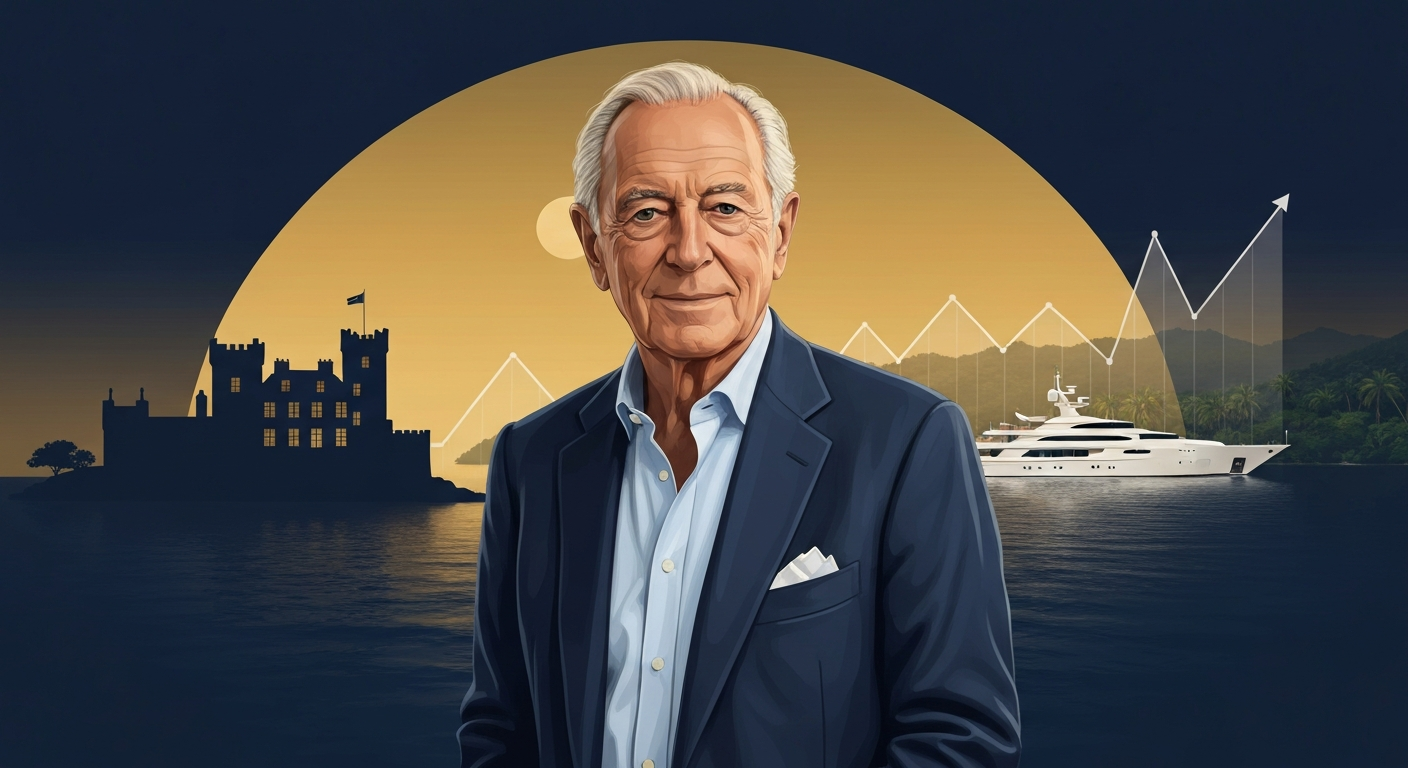
Peter de Savary's net worth at the time of his death on 30 October 2022 is estimated to have been in the range of £20 million to £40 million, based on the publicly reported figures available. The Sunday Times Rich List placed him at approximately £21 million in 1999 and around £34 million in 2002, while a 1997 Independent interview quoted him describing a reported fortune of £24 million. No probate grant amount has been publicly located in open sources, so these press-reported figures remain the best available benchmark. His wealth followed a dramatic arc: a reported peak of around £100 million by his early 40s, a severe 1990s restructuring that wiped out much of that, and a slower rebuild through hospitality and marina projects in the 2000s and 2010s.
Net Worth Snapshot
| Estimate | Date / Period | Primary Source |
|---|---|---|
| ~£100 million (peak) | c. mid-1980s | Obituary summaries (The Guardian, The Week) |
| ~£24 million | 1997 | The Independent (7 Jun 1997) |
| ~£21 million | 1999 | Sunday Times Rich List (reported in public biographical summaries) |
| ~£34 million | 2002 | Sunday Times Rich List (reported in public biographical summaries) |
| £20m–£40m (estimated range at death) | October 2022 | Synthesis of press figures; no probate grant publicly located |
These figures come from press reporting rather than audited accounts or a publicly accessible probate record. The Sunday Times Rich List figures are widely cited in Wikipedia and secondary biographical sources because the original pages sit behind a paywall. Anyone needing a verified estate value would need to commission a formal search through the HMCTS Probate Service. For historical comparison, see the short profile on Johan van Oldenbarnevelt net worth for another example of an estimated estate value presented from secondary sources.
Who Was Peter de Savary?
Peter John de Savary was born on 11 July 1944 and died on 30 October 2022 in Chelsea, London. He was a British entrepreneur and adventurer who built his reputation across hospitality, luxury real estate, yachting, and marina development over roughly five decades. He is perhaps best remembered publicly for transforming Skibo Castle in the Scottish Highlands into the Carnegie Club, one of the most exclusive private members' clubs in the world, and for financing British America's Cup syndicates in the 1980s. For a contrasting profile of a famous motorsport figure and his finances, see Gilles Villeneuve net worth. The Caterer described him as someone who transformed more than 60 hotels across his career, and the yachting industry credited him as a founder of Pendennis Shipyard in Falmouth. He had five children and was candid in interviews about not intending to leave them a large inheritance, saying publicly in 1997 that he did not want to die rich. For a related celebrity net worth profile, see Justin de Villeneuve net worth.
Career Timeline: How the Fortune Was Built
De Savary's career can be divided into three broad phases: rapid accumulation in the 1970s and 1980s, a painful restructuring in the early 1990s, and a gradual reconstruction through hospitality and resort development from the late 1990s onward.
1970s: Early Trading and Commodities
De Savary built his initial capital through international trading and commodities businesses, operating across North America, the Caribbean, and the Middle East. The precise details of his early-career earnings are not well documented in open sources, but by the early 1980s he had accumulated enough capital to fund major trophy-asset acquisitions and to finance competitive sporting campaigns.
1983: America's Cup and Public Profile
De Savary led and financed a British America's Cup syndicate in 1983, raising his international profile considerably. The campaign did not win but it established him as a credible and flamboyant figure in elite yachting circles. He mounted further syndicate activity through the late 1980s and early 1990s, including involvement reported in connection with the Blue Arrow challenge listed in the Los Angeles Times in February 1991.
Late 1980s: Peak Accumulation
The late 1980s were the high-water mark. De Savary acquired Land's End and John o' Groats, two of Britain's most symbolically loaded tourist landmarks. He also acquired Skibo Castle in the Scottish Highlands and began its conversion into the Carnegie Club. In 1988, he was a driving force behind the founding of Pendennis Shipyard in Falmouth, a superyacht construction and refit yard that grew into one of the most respected in Europe. Obituary summaries from The Guardian and The Week report that his fortune reached an estimated £100 million around this period.
Early 1990s: Restructuring and Asset Sales
The property market collapse of the early 1990s hit de Savary's portfolio hard. He sold Land's End and John o' Groats in 1991, and his holding structures were reported to have collapsed or been significantly restructured through the mid-1990s. The 1997 Independent interview, in which he referenced a fortune of £24 million, came in the aftermath of this period. It was a significant reduction from the reported peak but still represented a substantial personal position after a near-decade of disposals.
Late 1990s and 2000s: Rebuilding Through Luxury Hospitality
De Savary rebuilt through a cluster of high-concept hospitality properties: the Carnegie Club at Skibo Castle (which attracted enormous international publicity when Madonna and Guy Ritchie married there in 2000), Bovey Castle in Devon, Stapleford Park in Leicestershire, and Carnegie Abbey in Newport, Rhode Island. He also developed the Port Louis marina and resort in Grenada and the Mount Cinnamon hotel on the island. The Carnegie Club at Skibo was eventually sold in the early 2000s to investor Ellis Short. In late 2005, de Savary joined the board of Millwall Holdings plc, resigning from the football club board in 2006 but remaining on the Holdings board until October 2006, according to Companies House records.
2010s and Final Years: Caribbean and Ongoing Projects
De Savary continued to develop and manage Caribbean hospitality assets into his later years, with Grenada remaining a focus. The Grenada Hotel and Tourism Association published a tribute after his death in November 2022 recognising his lasting contribution to the island's tourism infrastructure. GHTA remembers life and legacy of Peter De Savary, NOW Grenada (Nov 2022) documents his Port Louis marina and Mount Cinnamon hotel projects and carries the Grenada Hotel & Tourism Association's tribute after his death GHTA remembers life and legacy of Peter De Savary — NOW Grenada (Nov 2022). Companies House records list 18 appointments over the course of his career, reflecting the breadth of corporate vehicles he used.
The Businesses That Generated Most of the Wealth
Several ventures stand out as the primary engines of de Savary's wealth at different points in his career.
- The Carnegie Club at Skibo Castle: Converted from a derelict Highland estate into one of the world's most exclusive private members' clubs, drawing ultra-high-net-worth members and international celebrity weddings before being sold to Ellis Short.
- Land's End and John o' Groats: Acquired as a combined tourist-attraction portfolio, generating visitor revenue and property value appreciation through the late 1980s before being sold in 1991.
- Pendennis Shipyard (Falmouth): Founded in 1988, this superyacht construction and refit facility became a prestige name in the global superyacht industry and a lasting institutional legacy of his maritime interests.
- Bovey Castle and Stapleford Park: Luxury country-house hotel and golf properties that fed into the late-1990s and 2000s hospitality rebuild.
- Carnegie Abbey (Newport, Rhode Island): A US-based private members' club extending the Carnegie brand transatlantically.
- Port Louis Marina and Mount Cinnamon (Grenada): Resort and marina development generating Caribbean hospitality revenue in his later career.
Asset Breakdown by Category
| Asset Category | Key Holdings / Notes | Approximate Period Active |
|---|---|---|
| Hotels and country-house clubs | Skibo/Carnegie Club, Bovey Castle, Stapleford Park, Carnegie Abbey, Mount Cinnamon | 1980s–2020s |
| Marinas and waterfront resort developments | Port Louis Marina (Grenada), various earlier marina interests | 1990s–2020s |
| Yachts and maritime assets | Kalizma (classic motor yacht), America's Cup campaign vessels, support yachts | 1980s–2000s |
| Tourist landmarks / real estate | Land's End, John o' Groats (sold 1991); Skibo Castle estate | Late 1980s–early 2000s |
| Shipyard stake | Pendennis Shipyard (Holdings) Limited (founder/early backer, 1988) | 1988 onward |
| Company stakes / board roles | Millwall Holdings plc (non-executive, 2005–2006); various trading and holding companies (18 Companies House appointments) | Various |
Major Financial Events and Transactions
1991: Disposal of Land's End and John o' Groats
The sale of Land's End and John o' Groats in 1991 was a direct response to the early-1990s property market crash. These were high-profile assets acquired at or near the peak of the 1980s boom, and their disposal marked the beginning of a sustained period of restructuring.
Mid-1990s: Holding Structure Collapse and Restructuring
Wikipedia's biographical summary and press obituaries record that de Savary's 1980s group holding structures collapsed or were significantly restructured in the mid-1990s. Exact creditor figures are not consistent across sources, and no single authoritative insolvency filing total is available in open sources. The result was a reduction in reported net worth from the estimated £100 million peak to the £24 million figure he referenced in 1997.
Early 2000s: Sale of the Carnegie Club at Skibo
The Carnegie Club at Skibo Castle was sold to investor Ellis Short in the early 2000s. Ellis Short: all you need to know about Sunderland's man at the helm, The Guardian (28 May 2009) reports the Carnegie Club at Skibo Castle was sold to investor Ellis Short Ellis Short: all you need to know about Sunderland's man at the helm — The Guardian (28 May 2009) reports the Carnegie Club at Skibo Castle was sold to investor Ellis Short.. The Guardian's profile of Ellis Short (published May 2009) confirms this transaction. The sale realised significant capital but also removed de Savary's most internationally recognisable trophy asset.
2005–2006: Millwall Holdings Board Involvement
Companies House records show de Savary was appointed to Millwall Holdings plc on 29 November 2005 and resigned from the football club board during 2006, remaining on the Holdings board until October 2006. This was a relatively limited involvement and does not appear to have been a material wealth event in either direction.
Estate Outcome at Death (2022)
No probate grant amount has been publicly located via open-access sources. The HMCTS Probate Service in England and Wales does hold probate records, but the search process requires a formal paid search or certified copy request. De Savary had stated publicly in 1997 and in subsequent interviews that he did not intend to leave large trusts to his children, preferring to spend or donate his wealth during his lifetime. Whether that intention was fully realised in his estate cannot be confirmed from public sources.
Lifestyle, Philanthropy, and Controversies
De Savary was openly flamboyant in his lifestyle. He owned multiple yachts, including the famous classic motor yacht Kalizma (previously owned by Richard Burton and Elizabeth Taylor), and maintained a visible presence in the superyacht world throughout his career. His America's Cup campaigns in the 1980s were as much personal passion projects as commercial calculations.
On philanthropy, he was quoted repeatedly as preferring to give money away during his lifetime rather than accumulate it for inheritance. The 1997 Independent article, headlined 'De Savary disinherits his daughters,' described his stated intention not to leave his reported £24 million fortune to his five children. This stance was reiterated in Guardian and other obituaries in November 2022.
In terms of controversies, the 1990s restructuring and asset disposals attracted considerable press scrutiny at the time, though no major criminal or regulatory findings are recorded in the sources reviewed. His tenure at Millwall Holdings was short and does not appear to have generated significant controversy in public records. His reputation in the Caribbean hospitality sector remained broadly positive, as reflected in the Grenada Hotel and Tourism Association tribute published after his death.
De Savary in the Context of European Luxury Hospitality
De Savary operated in the same European luxury and hospitality orbit as some of the figures profiled elsewhere on this site, though his model was distinctly Anglo-Caribbean rather than tied to the French luxury conglomerates. For related context on prominent French figures' personal wealth, see a profile of François Villeroy de Galhau net worth. Where figures like Bernard Arnault at LVMH or François-Henri Pinault at Kering built wealth through brand aggregation and equity compounding, de Savary's approach was asset-level: buy a distressed or undervalued estate, invest heavily in its physical and conceptual transformation, and monetise either through membership fees, hotel revenues, or eventual sale. It is a model closer to boutique private equity in hospitality than to the brand empire approach. The closest comparison in the profiles on this site might be someone like Gilles Mendel, whose wealth is also tied to a specific luxury craft rather than a diversified conglomerate structure.
His maritime activities place him in a niche that overlaps with the superyacht and marina economy rather than fashion or retail luxury. Pendennis Shipyard, which he helped found, became a genuine institutional player in that sector and arguably represents his most durable wealth-creating legacy in terms of an enterprise that outlasted his personal ownership.
How to Read the Net Worth Estimate
A few things are worth being transparent about when reading any published estimate of Peter de Savary's net worth. For related coverage of a different individual with a similar name, see the Peter de Neufville net worth overview.
- The Sunday Times Rich List figures cited in secondary sources (£21 million in 1999, £34 million in 2002) are plausible and consistent with the directional narrative of his wealth rebuilding after the 1990s restructuring, but the original Sunday Times pages are behind a paywall and cannot be independently verified without a subscription.
- The £24 million figure from the 1997 Independent article is the most directly sourced single data point, as de Savary himself referenced it in the interview. However, self-reported wealth estimates in press interviews are not audited figures.
- The 'estimated £100 million by his early 40s' figure that appears in obituary summaries is a synthesis statement rather than a contemporaneous report. It should be treated as a rough order of magnitude rather than a precise valuation.
- No probate grant has been located in open public sources. A formal search through HMCTS Probate Service would be required to obtain the official declared estate value. Until that figure is available, the £20 million to £40 million range represents a reasonable working estimate based on the available press-reported data.
- De Savary's stated intention not to leave a large estate to his children introduces uncertainty about how much wealth remained at death versus what was spent, donated, or transferred during his lifetime.
A Quick Comparison to Peers in Luxury and Hospitality
| Individual | Primary Wealth Source | Approximate Net Worth (Public Estimate) | Key Comparison Point |
|---|---|---|---|
| Peter de Savary | Luxury hospitality, marinas, yachting | £20m–£40m (at death, 2022) | Asset-level hospitality entrepreneur; Anglo-Caribbean focus |
| Gilles Mendel | Luxury fashion (J. Mendel) | Not publicly disclosed | Craft-based luxury business; boutique rather than conglomerate |
| Justin de Villeneuve | Fashion management and creative industries | Not publicly disclosed | British luxury/fashion adjacent; boutique career arc |
| François Villeroy de Galhau | Public sector / Banque de France | Salary/public role, not equivalent | French institutional figure; no comparable private fortune |
De Savary's wealth was relatively modest by the standards of the French luxury conglomerate dynasties this site primarily covers, but it was built through genuine entrepreneurial risk-taking rather than inherited brand equity. For a contrasting celebrity net worth profile from the sports world, see ab de villiers net worth. For a contrasting example from professional sports, see the Wout van Aert net worth profile. His career offers a useful reference point for understanding how fortunes are made and lost in the asset-intensive end of European luxury hospitality, where a single market downturn can erase a decade of accumulation, as happened to him in the early 1990s.
FAQ
SEO title and meta description
Title: Peter de Savary net worth — profile, assets and career (estate at death) Meta description: Estimate range and verified evidence for Peter de Savary’s net worth, career, assets and estate outcomes (hospitality, yachting, real estate).
Net worth snapshot (estimate range and status at death/latest valuation) — short answer
Estimate at death (30 Oct 2022): commonly reported public estimates place Peter de Savary’s net worth in a conservative published range of £20–£40 million at points in the late 1990s–2000s; earlier peak estimates reported in press summaries place earlier-career peak values higher (widely reported as up to c.£100m in some obituaries). No single authoritative, fully verified probate figure was available in public free indexes at time of research; a formal HMCTS probate search is required to confirm the estate’s grant value. Sources: The Guardian obituary (career arc and public estimates) and The Independent (1997 figure). Links: https://www.theguardian.com/business/2022/nov/10/peter-de-savary-obituary; https://www.independent.co.uk/news/de-savary-disinherits-his-daughters-1254475.html; HMCTS probate search: https://probatesearch.service.gov.uk/.
Net-worth evidence table (small table summarising estimate, date and primary sources)
Net worth estimate | Date (reported) | Primary sources £24m (reported) | Jun 1997 | The Independent — 'De Savary disinherits his daughters' (1997) — https://www.independent.co.uk/news/de-savary-disinherits-his-daughters-1254475.html c.£21m – £34m (reported placements on press Rich Lists) | 1999–2002 (press summaries) | Press biographical summaries / Sunday Times Rich List citations summarized in public biographies (see Wikipedia and cited sources) — https://en.wikipedia.org/wiki/Peter_de_Savary Peak press summaries (historical peak cited in obituaries: up to c.£100m) | 1980s–early 1990s (peak) | Obituaries and profiles summarising career arc — The Guardian (2022) — https://www.theguardian.com/business/2022/nov/10/peter-de-savary-obituary Official estate/grant of probate value | 2022 (post-death) | Not located in free public indexes; obtain via HMCTS probate paid search — https://probatesearch.service.gov.uk/.
Methodology and sources used to estimate net worth
Methodology: rely on contemporaneous media reports, Companies House director filings, trade‑press records for asset sales/acquisitions, and obituaries that summarise past public valuations. Where direct, auditable public records exist (company appointments, sale announcements, buyer confirmations) those are cited. For figures reported in press Rich Lists or interviews, we treat them as press-reported estimates and flag variability and lack of single authoritative confirmation. For a definitive estate number, a paid HMCTS probate search or certified grant copy is required. Primary source list: The Guardian obituary (10 Nov 2022), The Independent (7 Jun 1997), Companies House officer appointments, Pendennis/Pendennis Shipyard histories, yachting press (SuperYachtTimes), Millwall Holdings prospectus, HMCTS probate search. Links: https://www.theguardian.com/business/2022/nov/10/peter-de-savary-obituary; https://www.independent.co.uk/news/de-savary-disinherits-his-daughters-1254475.html; https://find-and-update.company-information.service.gov.uk/officers/frTAG8kpsFxajUPrvTN8sJPX7qE/appointments; https://www.superyachttimes.com/features/pendennis-shipyard-at-the-yard; https://probatesearch.service.gov.uk/.
Chronological career summary focused on wealth generation
- 1944–1970s: Background and early ventures leading to shipping, property and hospitality interests (biographical summaries). - 1980s: Rapid expansion into luxury hospitality, country-house hotels and high‑profile projects (Skibo Castle/Carnegie Club development, purchase/development of Land’s End/John o’ Groats, involvement in casinos and country clubs). Sources: The Guardian obituary. - Late 1980s–1990s: Yachting investments and Pendennis Shipyard founding (1988) to support superyacht construction/refit; led British America’s Cup syndicates in the 1980s/early 1990s. Sources: SuperYachtTimes; LA Times. - Early–mid 1990s: Major downturn — sale of Land’s End and John o’ Groats (1991) and restructuring of holding companies; press reported large debts and disposals. Sources: press summaries/Wikipedia citing contemporaneous reporting. - 2000s–2010s: Rebuilding a hospitality portfolio — sales of assets such as Skibo (Carnegie Club sold to Ellis Short early 2000s) and continued investments in hotels, marinas and Caribbean resorts (Port Louis, Mount Cinnamon). Sources: The Guardian; The Guardian profile of Ellis Short; NOW Grenada. - 2005–2006: Board role and later resignation from Millwall Holdings / Millwall FC (company prospectus). Sources: Millwall Holdings prospectus. - 2022: Death and industry tributes noting long-term influence on luxury hospitality and yachting. Sources: The Caterer; The Guardian.
Asset breakdown and major financial events (sales, acquisitions, bankruptcies, estate outcomes)
Assets and portfolio (publicly reported elements): - Hotels & country-house clubs: Skibo Castle (Carnegie Club), Stapleford Park, Bovey Castle, Carnegie Abbey and others — developed and operated as luxury destination clubs (The Guardian; The Caterer). - Marinas & resorts: Port Louis Marina developments in Grenada and Mount Cinnamon resort projects (NOW Grenada; regional trade press). - Yachts & yachting businesses: Owner/user of classic motor yacht Kalizma and backer/founder of Pendennis Shipyard (SuperYachtTimes). Active in America’s Cup syndicates (LA Times). - Land & high-profile attractions: Former owner/developer of Land’s End and John o’ Groats (sold 1991) — part of major 1990s disposals (press summaries). Major financial events: - Early 1990s downturn: sold Land’s End/John o’ Groats in 1991 and restructured holdings after creditor pressure; reported material reductions in net worth across press coverage (various contemporary reports summarized in biographies/Wikipedia). - Sale of Skibo/Carnegie Club to Ellis Short: early 2000s sale publicly reported (Ellis Short profiles reference purchase). Source: The Guardian (Ellis Short profile). - No freely accessible probate/grant figure located in public search at time of research — to confirm estate value use HMCTS paid search. Source: HMCTS probatesearch service.