
The most credible estimate for Denis Villeneuve's net worth as of April 2026 sits somewhere between $30 million and $50 million, with $40 million being the most commonly cited midpoint. That range is driven almost entirely by his director and producer fees on major Hollywood films, with the Dune franchise doing the heaviest lifting. Here is what is actually behind that number, why sources disagree, and how to check it yourself.
Denis Villeneuve Net Worth: Estimated Range and How It’s Made

Laurent Devereaux
8 Apr 2026
Which Denis Villeneuve are we talking about?

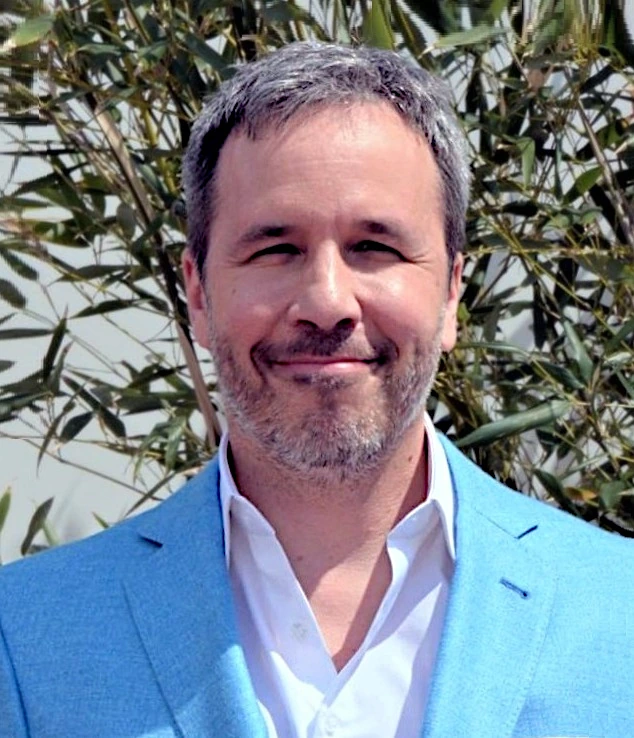
Denis Villeneuve the film director is the person behind this net-worth conversation. He was born on October 3, 1967, in Gentilly, Quebec, Canada, and is one of the most commercially successful French-Canadian directors working in Hollywood today. He is not to be confused with other public figures who share similar names or spelling variations online. The fastest way to confirm you are looking at the right person is to use his IMDb identifier, which is nm0898288. That ID is tied directly to his filmography and avoids any name-collision issues you might run into on general search engines.
Just to be clear about who he is not: this article is not about Denis Simioni, the Canadian radio entrepreneur, or any other Denis in the public eye. Villeneuve the director is the subject here, and his wealth is a product of a specific Hollywood career arc that started in Quebec and scaled up dramatically over the last decade.
How his career built earning power over time
Villeneuve started in Quebec cinema with French-language films including August 32nd on Earth (1998), Maelström (2000), Polytechnique (2009), and Incendies (2010). That early phase built his reputation but not his bank account. Quebec art-house productions do not generate the kind of fees that Hollywood studio films do. His first feature premiered at Cannes in 1998, and that festival pedigree mattered later for his career leverage, but the real financial inflection point was Incendies.
Incendies earned an Academy Award nomination for Best International Feature Film. That single nomination is worth more than the film's budget in terms of what it does for a director's negotiating position. It signaled to Hollywood studios that Villeneuve could make prestige work that crossed over to mainstream audiences. The result was Prisoners (2013) with Warner Bros., which gave him his first major US studio paycheck. He described his experience on Prisoners as one where he had full creative control, which is a detail that matters because directors who can demonstrably protect their vision tend to command better terms on subsequent projects.
The progression after that followed a clear upward trajectory: Sicario (2015), Arrival (2016), Blade Runner 2049 (2017), and then the Dune duology in 2021 and 2024. Each project increased his market value. By the time he was negotiating Dune, he was not just a director for hire; he was a brand that studios wanted attached to tentpole productions. That distinction changes the compensation structure significantly. Much like Denis Savard built his earning leverage through a long career of sustained performance, Villeneuve's wealth reflects decades of consistent output at an increasingly elite level.
Where the money actually comes from

Directors at Villeneuve's level earn money from three main sources: upfront director fees, producer fees (when credited as such), and backend participation tied to a film's commercial performance. On the Dune films, Villeneuve is credited as both director and producer, and he also co-wrote the screenplay. That combination is important because it means he earns from multiple contract lines on a single project, not just one.
For context on scale: Dune: Part Two approached $500 million at the global box office and surpassed the entire theatrical run of the first Dune film. AP News reported that Dune: Part Two had a reported production cost of $122 million. Dune (2021) itself was a major commercial hit. When a film performs at that level, any backend participation clause in a director's contract can generate meaningful additional income beyond the base fee. We do not have the specific contract terms because those are private, but the general structure of how A-list directors are compensated in Hollywood is well documented, and Villeneuve clearly sits in that tier.
Outside of directing and producing fees, Villeneuve earns from his screenwriting credits. Co-writing Dune means he holds a writer's credit that carries residual income through guild structures. There is no public evidence of major external investments, a luxury brand stake, or an entrepreneurial side business in the way that some French business dynasties are built. His wealth is a filmmaker's wealth: high fees, career longevity, and smart positioning on large-scale projects. This is quite different from the kind of fortune tracked on this site for figures like Denis Levasseur, whose wealth is tied to business enterprise rather than creative fees.
The best net worth estimate and how to think about the range
The $40 million figure from Celebrity Net Worth is the most widely cited number. It is a compilation estimate, not a disclosure from a court filing, tax record, or verified financial statement. Think of it as a reasonable middle point based on known career income, not a precise measurement. The realistic range is $30 million to $50 million based on what we can infer from public information.
Here is roughly how that math works. A director of Villeneuve's standing can command fees in the range of $5 million to $15 million per film at the studio level, sometimes higher for major franchises. Across Prisoners, Sicario, Arrival, Blade Runner 2049, and the two Dune films, that adds up quickly even before backend or producing fees. Subtract taxes, agent and manager fees (typically 10 to 15 percent of gross income), and lifestyle costs over a career, and a $30 to $50 million net worth is a plausible outcome. It is not a billionaire's fortune, but it is a very comfortable and well-earned one.
| Source | Estimate | Methodology |
|---|---|---|
| Celebrity Net Worth | $40 million | Compilation estimate; no disclosed source contracts |
| TheRichest | ~$16 million | Lower methodology; likely underweights producer/writer income |
| Inferred career earnings model | $30–50 million | Based on director/producer fees, box office scale, guild residuals |
Why sources disagree so much
The gap between $16 million and $40 million is not a typo; it reflects genuinely different assumptions. Sites like TheRichest and Celebrity Net Worth use different methodologies and update their figures on different schedules. Some only count a director's base salary and ignore producing fees, residuals, and backend participation. Others may inflate figures by assuming maximum backend payouts that may or may not have materialized. Neither number comes from a primary source like a tax filing or disclosed contract.
The other complication is timing. If a site last updated its estimate before Dune: Part Two was released, it would be missing income from one of Villeneuve's biggest commercial hits. AP News reports that Dune: Part Two opened with a $81.5 million debut in North America during its debut weekend (studio estimates) blank" rel="noopener noreferrer">Dune: Part Two was released. Net worth is not static, and a filmmaker who just delivered two back-to-back blockbusters in a major franchise is almost certainly worth more today than the same person was in 2019. This same pattern applies when you look at wealth profiles for athletes like Denis Bouanga, where contract updates can shift figures dramatically in a short period.
There is also the issue of what counts as net worth. Some calculations include estimated value of intellectual property rights or future royalties. Others stick to liquid and near-liquid assets. A director who owns partial rights to a franchise has paper wealth that is real but hard to value precisely. All of this is why a range is more honest than a single number.
Assets, lifestyle, and what we can actually confirm

Villeneuve is notably private about his personal finances and lifestyle compared to many Hollywood directors. There is no public record of extravagant real estate portfolios, yacht purchases, or art collections. He is based in Montreal and maintains a relatively low public profile outside of his professional work. This is consistent with his on-record comments about creative control and process being more important than celebrity.
What we can confirm is the professional side: his credits on IMDb (use ID nm0898288 to verify), the box-office performance of his films on databases like The Numbers, and his producing credits on the Dune films. What we cannot confirm is the specific fee he received on any individual film, whether he has backend participation and how much it has paid out, or the current value of any real estate or investment holdings.
It is worth noting that some French-Canadian public figures in creative industries have built their wealth through business extensions: endorsements, production company equity, licensing deals. There is no clear public evidence that Villeneuve has pursued those routes at scale. His producing credit on Dune suggests some equity-style involvement in the franchise, but the specifics are not public. For comparison, figures like Denis Ménochet, who works in the same French-language film world, operate at a very different financial scale, which helps put Villeneuve's Hollywood-level earnings in perspective.
How to verify and update the number yourself
If you want to do your own cross-check rather than just trust a compilation site, here is a practical approach. Start with The Numbers' person page for Villeneuve, which tracks box-office data tied to his credited roles as director and producer. This gives you a sense of the commercial scale he has operated at. Cross-reference those credits against IMDb using his ID (nm0898288) to confirm which roles he held on each film. Then look for any publicly reported contract commentary in trade outlets like Variety or Deadline, which sometimes report on deal structures or fee ranges for high-profile directors without disclosing exact figures.
- Go to The Numbers and search for Denis Villeneuve's person page to see his full box-office record as director and producer.
- Verify his role on each film using IMDb person ID nm0898288 (director only vs. director and producer matters for income modeling).
- Search Variety, Deadline, and The Hollywood Reporter for any reported deal terms or fee commentary tied to his major projects.
- Check Celebrity Net Worth and similar sites but treat their figures as estimates with a wide margin, not confirmed facts.
- Revisit the number after any major new release or announced project, since filmmaker net worth can shift significantly with a single large deal.
One thing to watch going forward: if Villeneuve directs a third Dune film or takes on another major franchise, his fee tier will likely increase again. Directors who have delivered multiple billion-dollar-adjacent franchises can command fees that would meaningfully push his net worth past the $50 million mark. Until a new major deal is announced and reported, the $30 to $50 million range with $40 million as the working estimate is where the evidence points. Anyone curious about how other French-connected public figures build and grow their wealth can browse related profiles on this site, including a look at Benoit Saint-Denis for a sense of how wealth accumulates in very different career paths.
The bottom line is straightforward: Denis Villeneuve is a legitimately wealthy filmmaker whose fortune is built on sustained excellence at the top tier of Hollywood directing, not on side businesses or investment portfolios. The $40 million estimate is defensible, the true figure is probably somewhere between $30 million and $50 million, and no public source has the exact number because it has never been disclosed. That is the honest answer, and it is good enough to give you real context for what you were searching for. If you want to dig further into the mechanics of how creative industry wealth gets tracked and verified, profiles of figures like Denis Le Saint and Denis Manelski offer useful comparison points for how different methodologies produce different results across different industries.
FAQ
Why do some websites list Denis Villeneuve net worth as much higher or lower than others?
If you see wildly different numbers, check whether the estimate is mixing up net worth with annual earnings or assuming franchise back-end payouts that are never publicly confirmed. A common mistake is treating compilation websites as if they had access to contract and tax details, when they mostly infer from career income and public deal chatter.
Does Denis Villeneuve net worth change after each new movie?
Yes. The range can shift notably after major releases because director compensation often includes residuals and performance-linked participation that may not be reflected in older estimates. Estimates should be viewed as snapshots, not lifetime totals, especially around tentpole rollouts like Dune.
How much does Villeneuve’s producing credit affect net worth estimates?
Some lists treat “producing” as a smaller addition than it actually can be. If Villeneuve is credited as both director and producer on a project, he can earn from multiple contract lines (front fees, producer fees, and potentially some participation), so undercounting producing roles can pull estimates downward.
What exactly do these net worth numbers include, assets only or also royalties and IP value?
It depends on the methodology. Estimates that include intellectual property or future royalties can look higher than those that stick to liquid assets. Since those right valuations are not public, two “net worth” numbers can both be reasonable while still measuring different components.
How can I verify whether a net worth estimate is based on the correct credits?
A useful practical check is to compare his credited roles across films on IMDb using his identifier nm0898288, then correlate that with film scale using box office databases. If a site’s estimate assumes he earned from projects where he was not credited (or misses a major franchise), that’s a red flag.
Does Villeneuve being private about money make net worth estimates less reliable?
If a director is described as private, that often means there are no readily available disclosures, not that finances are modest. Privacy mainly limits confirmable details like real estate holdings or disclosed investment portfolios, so most figures remain inference-based ranges.
Do net worth estimates account for taxes, agent/manager fees, and lifestyle costs?
Manager and agent fees are typically deducted from gross compensation in many net-worth reconstructions, and lifestyle costs are another major drag over decades. Many published “income-to-net-worth” calculations ignore or simplify these deductions, which can make the implied net worth seem inflated.
Why can’t we just estimate Denis Villeneuve’s backend earnings from box office alone?
Backend participation is the biggest uncertainty for anyone calculating a precise net worth. Even when back-end exists, the actual payout depends on thresholds, definitions of “participation,” and accounting, so estimates that assume maximum backend success can overshoot.
How can I tell whether a net worth estimate is outdated?
Yes, because different sites update at different times. A figure may look outdated if it was last updated before a major performance event, like a later blockbuster in a franchise, which can delay reflecting additional compensation.
Is Denis Villeneuve net worth mostly from film work, or do we know of big investments or side businesses?
No strong public evidence suggests he has a big side business driving wealth, at least relative to his filmmaking compensation. That means most credible estimates should be anchored to his film fees, producing credits, writing residuals, and franchise-related participation rather than assumed entrepreneurship.