Antoine Arnault's net worth sits somewhere in the range of $5 billion to $10 billion depending on which tracker you consult, when you check, and how they handle the thorny question of family-held stakes versus individual ownership. That wide range is not sloppy reporting. It reflects a genuinely complicated ownership structure tied to one of the most valuable luxury conglomerates on the planet: LVMH.
Antoine Arnault Net Worth: LVMH Stakes, Estimates, and How to Verify

Laurent Devereaux
12 Apr 2026
Who is Antoine Arnault, exactly?

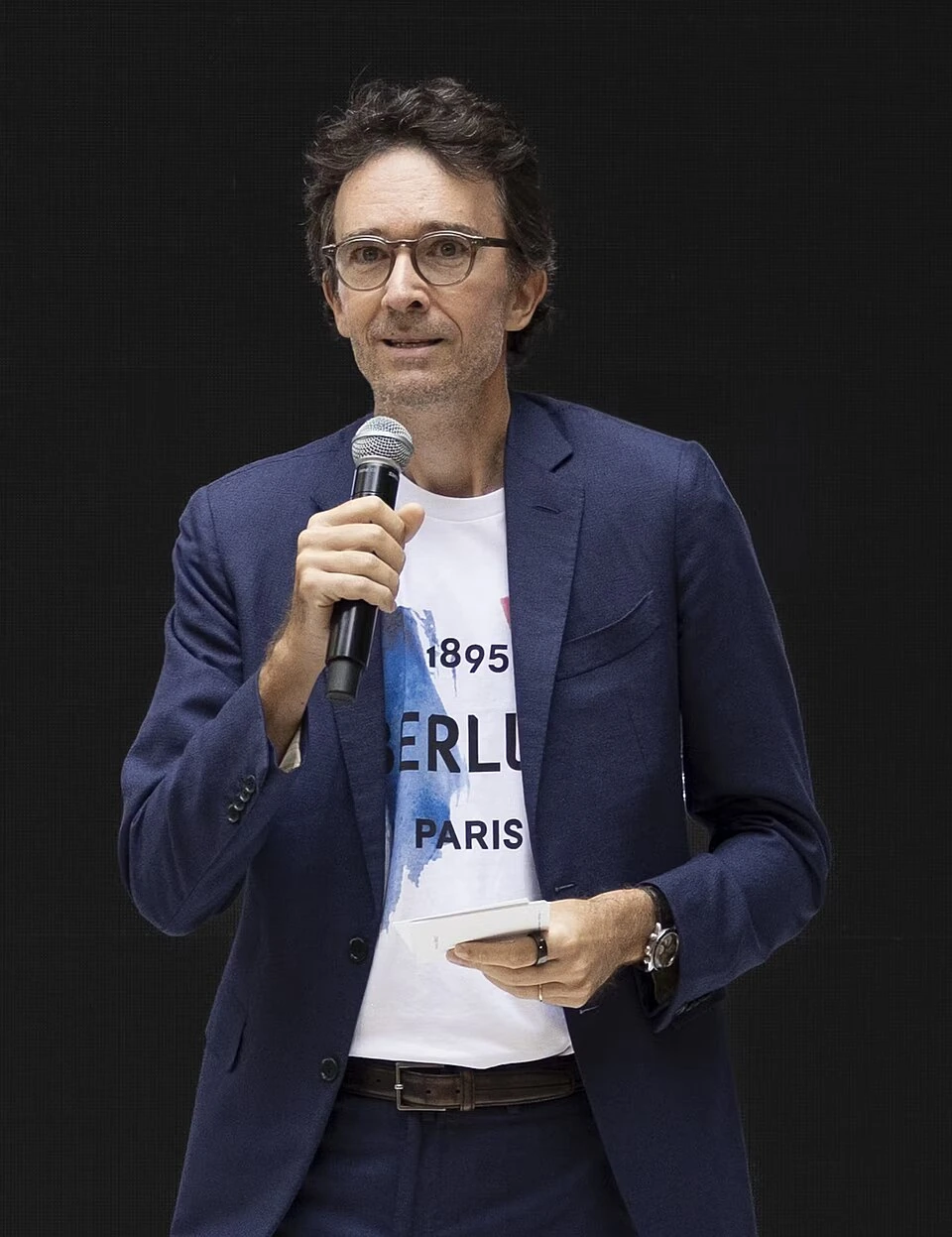
Antoine Bernard Jean Arnault was born in 1978 and is the second child of Bernard Arnault, the patriarch behind the LVMH empire. He is not just a surname on a boardroom door. He started his career in Louis Vuitton's advertising department back in 2005, worked his way into leadership positions, and has steadily accumulated one of the most influential executive portfolios in the Arnault family group.
His current roles (as of early 2026) include CEO and Vice-Chairman of the Board of Christian Dior SE, which he was appointed to in December 2022. He also chairs the Supervisory Board of Berluti (since January 2024), chairs Agache Sport, and sits on the board of Paris Football Club (announced November 2024). In February 2026, he was promoted to LVMH's Executive Committee, where he leads image and sustainability for the group. That last move was widely read as a signal that his role in the succession picture is growing.
When we talk about Antoine Arnault's "net worth," we mean the estimated total value of everything he personally owns or controls: shares in LVMH and related holding companies, dividends and cash accumulated from those positions, any private investments, and a stake in the broader Arnault family holding structure. Very little of this is publicly disclosed in the way a listed company's shareholding would be, which is why estimates vary so widely.
Current net worth estimates: what the numbers actually say
No major wealth tracker (Forbes, Bloomberg, or others) currently publishes a standalone Antoine Arnault net worth figure in the way they do for his father. Most estimates you'll find online are extrapolated by financial researchers who divide a portion of the Arnault family's collective LVMH stake across the five children, adjusted for any disclosed individual holdings.
The credible range most sources land on is roughly $5 billion to $10 billion. Some sites push the upper bound higher, citing his chairmanship of Christian Dior SE and the implied value of the family holding structure. Others are more conservative, because without a disclosed personal share count, any number is an educated estimate. For context, Forbes pegged Bernard Arnault's fortune at $169.8 billion as recently as January 2026, and Bloomberg has placed it as high as $192 billion at different points, illustrating just how much market movements and methodology affect the headline number for the family as a whole.
If you're comparing Antoine to other figures in adjacent spaces, it helps to understand that wealth profiles for people like him operate differently from, say, Antoine Duplantis's career earnings, where income is more directly traceable. Here, the bulk of the wealth is embedded in equity stakes and holding company structures.
How his wealth connects to LVMH

The core of Antoine Arnault's wealth is his position within the Arnault family group's ownership of LVMH. The architecture works like this: the family controls LVMH primarily through Financière Agache, a private holding company, and through Christian Dior SE, a listed entity that itself holds approximately 41% of LVMH's share capital and 57% of LVMH's voting rights (figures confirmed as of December 2023). The Arnault family group as a whole controls around 48% of LVMH's capital and 63.5% of voting rights, according to AMF filings.
Antoine's role as CEO and Vice-Chairman of Christian Dior SE is not ceremonial. Christian Dior SE is the listed holding company that sits directly above LVMH in the ownership chain. That position puts him at the center of the structure through which the family exercises control over an empire worth hundreds of billions of euros in market capitalization.
His promotion to the LVMH Executive Committee in February 2026 matters for wealth reasons too. Executive committee membership ties him more directly to group strategy, brand decisions, and the sustainability and image initiatives that can influence how the market values LVMH over time. Antoine was also the architect of LVMH's partnership with the Paris 2024 Olympics and has driven major communication campaigns for Louis Vuitton, both of which are brand equity moves that feed the long-term valuation story.
The family wealth picture and what it means for Antoine
This is where things get complicated. Both Forbes and Bloomberg attribute all or nearly all of the LVMH family shareholding value to Bernard Arnault personally, because he is the controlling executive and patriarch. That methodology means Antoine does not appear on those rankings as a billionaire in his own right, even though the family structure is being actively reshaped to pass control to the five children.
A key development here: Financière Agache, Bernard Arnault's main holding company, announced a conversion structure specifically designed to hand control of the entity to his five children. That restructuring, if fully executed, would transfer a meaningful ownership position to Antoine and his siblings, which would translate directly into a higher independently attributable net worth for each of them.
LVMH shareholders also voted to allow Bernard Arnault to remain CEO until he turns 85. Antoine and his sister Delphine (children from Bernard's first marriage) are the most prominent of the five siblings in executive roles. The succession timeline is long, but the structural groundwork is visibly being laid, and each leadership expansion for Antoine is another data point in that picture.
Understanding this family-wealth context is genuinely useful if you're trying to make sense of why, say, a profile of Antoine Flamarion's wealth in the French financial world looks structurally simpler: most French wealth profiles outside the Arnault dynasty don't carry this kind of multi-layered holding company architecture.
Beyond LVMH: dividends, investments, and other income

Antoine Arnault's wealth isn't purely a paper figure tied to share prices. There are real cash flows involved. LVMH has historically paid substantial dividends, and Christian Dior SE, as a major LVMH shareholder, passes dividend income up through its own distribution structure. Family members with stakes in these vehicles benefit from those cash flows, which compound over time into investable capital.
His chairmanship of Agache Sport and involvement with Paris Football Club suggest investment interests that extend beyond the core luxury business, though the financial details of those positions are not publicly disclosed. Reuters (via Investing.com) reported on Agache's role in Paris FC, including describing Antoine Arnault as the designated representative of Agache on the Paris FC board (Nov 2024 context) Agache Sport and involvement with Paris Football Club. His career executive compensation across his various CEO and chairman roles also contributes to accumulated personal wealth, independent of his family stake.
Antoine has also been closely associated with positioning LVMH's brands at major cultural and sporting events, which reflects a broader strategic investment in brand equity rather than direct personal financial gain, but it does reinforce his value within the group hierarchy and likely his compensation leverage.
Why the numbers you find online differ so much
If you've searched for Antoine Arnault's net worth and gotten five different answers, here's why. Several factors drive the variation, and understanding them helps you read any number more critically.
| Factor | What it means | Effect on the estimate |
|---|---|---|
| Attribution methodology | Forbes and Bloomberg assign most family LVMH value to Bernard, not the children | Makes Antoine's individual figure look much smaller |
| Private holding valuations | Financière Agache is private; its value is estimated, not quoted | Wide variance depending on assumptions used |
| LVMH share price moves | Bernard's fortune dropped by €23 billion in one year due to valuation shifts | Antoine's implied stake moves in the same direction |
| FX effects | Figures quoted in dollars vs. euros diverge when the euro/dollar rate shifts | Same underlying wealth looks different across currencies |
| Undisclosed personal percentages | Antoine's exact personal shareholding in holding entities is not public | Any site giving a precise figure is making assumptions |
| Timing of data | Forbes pegged Bernard at $169.8bn in January 2026; Bloomberg put him at $192bn at another point | Snapshots differ even from the same calendar year |
The honest answer is that no public source has confirmed Antoine Arnault's personal stake percentage in Financière Agache or Christian Dior SE with enough specificity to produce a hard number. Every estimate is a modeled approximation. The $5 billion to $10 billion range is the most defensible bracket given what's publicly known, but it could move significantly as the family's ownership restructuring progresses and as LVMH's market capitalization fluctuates.
This is a pattern you see across the French wealth landscape. Even figures like Antoine Martel's net worth or those tied to real estate dynasties tend to carry wide estimation bands when the wealth is held through private vehicles rather than publicly traded shares.
How to evaluate any net worth figure you see for him
When you come across a specific number for Antoine Arnault, ask these questions before taking it at face value. First, does the source explain how it handles the family-versus-individual attribution problem? If it just takes a fraction of Bernard's fortune and divides by five, it's oversimplifying. Second, when was the data pulled? LVMH's share price can move 20% or more in a calendar year, and those swings cascade through every estimate in the family tree.
Third, does the figure include or exclude executive compensation and accumulated dividends? Most headline estimates focus only on equity stakes and ignore the cash flows that have been building for decades. Fourth, is the holding company valuation based on LVMH's current market cap or on a discounted private-company basis? Private holding companies often trade at a discount to their net asset value, so estimates using straight market-cap math may overstate the liquidation value.
If you want to track the most reliable proxy for where Antoine's wealth is heading, watch three things: LVMH's share price (as the underlying asset), any AMF filings that update the Arnault family group's declared ownership percentages, and news around the Financière Agache restructuring that is transferring control to the children. Those three inputs will tell you more than any single net worth estimate. For comparison on how other public figures build and disclose wealth in France's creative and media industries, a profile like Antoine Verglas's net worth shows how differently wealth looks when it's built through personal business ventures rather than inherited holding structures.
The bottom line: Antoine Arnault is almost certainly a billionaire in his own right when you account for his position in the family holding structure, his executive roles, and accumulated income. The exact figure is genuinely unknowable from public data alone, but the $5 billion to $10 billion range is a reasonable working estimate for 2026, with significant upside potential as the succession architecture continues to take shape. Profiles of figures like Antoine-Olivier Pilon in the French public sphere illustrate just how variable wealth attribution can be depending on the industry and disclosure norms involved.
FAQ
Why do some websites give a much higher or lower “Antoine Arnault net worth” number than the $5 billion to $10 billion range?
Most differences come from how they attribute value from the family holding structure, especially whether they (a) treat Financière Agache and Christian Dior SE stakes as fully “his” versus shared family control, and (b) value private holding interests at market-cap level rather than at a likely discount for illiquidity. The same LVMH share price can produce very different personal totals depending on that attribution model.
Can Antoine Arnault be worth billions even if Forbes or Bloomberg does not list him as a standalone billionaire?
Yes. Those ranking methodologies often assign nearly all LVMH-related stake value to Bernard Arnault because he is the controlling patriarch, even though ownership and control are being reshaped for the five children. In other words, Antoine’s modeled value can exist without appearing as a separate ranking entry.
Do net worth estimates include Antoine’s dividends and accumulated cash, or are they mostly based on share value?
Many headline estimates lean heavily toward equity value and may undercount dividend income and retained distributions. A more complete approach adds (1) dividend flow through Christian Dior SE and (2) any retained wealth from executive compensation that has already been converted into investments over time.
How does LVMH stock volatility affect Antoine Arnault’s estimated net worth?
Because the core wealth link is to LVMH, a major move in the share price can quickly shift valuation-based estimates. Even if Antoine’s ownership percentage stays constant, modeled values can swing materially, especially when trackers use current market capitalization as the valuation input.
What is the key “family-versus-individual” attribution issue I should look for in any estimate?
Check whether the source explains its method for converting family control into individual ownership. If they simply split one number evenly across siblings, they often ignore the governance reality (voting rights versus economic rights) and the fact that control and cash flow do not always map one-to-one to each child’s entitlement.
Should I treat the net worth number as the amount Antoine could sell tomorrow?
Not necessarily. Holding-company structures and cross-holdings usually mean modeled net worth is not the same as liquidation value. Private vehicles also often trade at discounts to net asset value, and real sell-down would depend on legal constraints, tax friction, and market impact.
What signals would most likely make Antoine Arnault’s attributed net worth rise in future estimates?
Watch for documented steps that transfer more economic ownership or control to the children, especially any effective implementation details of Financière Agache’s conversion and related governance changes. Also monitor updates to declared ownership percentages in regulatory filings, since those numbers directly feed valuation models.
If I want to verify the “model” behind an estimate, what inputs matter most?
Focus on four items: (1) the latest disclosed ownership percentages for Christian Dior SE and Financière Agache in relation to LVMH, (2) how the estimator handles voting rights versus capital value, (3) what discount factor (if any) they apply to private holding interests, and (4) whether they include dividends and compensation or only equity valuation.
Do Antoine’s roles at Christian Dior SE, LVMH, and other boards automatically mean his personal wealth increases?
Not automatically. Board and committee roles can come with compensation, but much of the “wealth story” depends on whether his economic stake and incentive arrangements truly increase. Titles can signal influence and succession trajectory, but the net worth impact comes from ownership, bonuses, and any equity-like incentives that convert into tradable or retained assets.
How can I spot low-quality net worth posts or misleading calculations?
Be cautious if the source provides a single fixed number without showing assumptions, uses simplistic “divide by five” logic, or never states the valuation date. Also red flag: figures that treat all family holding value as immediately attributable to Antoine without explaining how governance and private holding discounts were handled.